

General Roofing
Location-Specific
Roofing
How Long Does a Roof Last in Florida?
The summer sun beats down on Palm Bay, a familiar warmth that often gives way to sudden, torrential downpours. You might be enjoying a quiet afternoon, when a quick gust of wind rattles the windows, or the rain starts to fall with an intensity that makes you wonder: how is my roof holding up? For homeowners across Brevard County, this isn’t just a fleeting thought; it’s a genuine concern. Your roof is your home’s primary defense against the elements, and in Florida, those elements can be relentlessly unforgiving.
Understanding the expected lifespan of your roof is crucial for peace of mind and smart homeownership, especially here in Palm Bay where we experience everything from intense UV radiation to tropical storms. This guide aims to demystify the factors that determine how long your roof will protect your family and belongings. We’ll explore the unique challenges Florida’s climate presents and what you can do to maximize your roof’s durability.
At Florida Roof Bros, we understand these concerns intimately. As a family-owned business deeply rooted in the community, we’ve dedicated ourselves to providing lasting roofing solutions that stand up to our state’s demanding weather patterns. We believe every homeowner deserves to feel secure under a sturdy roof, without having to constantly worry about its condition.
We’ll help you navigate the complexities of roof longevity, from understanding different material lifespans to recognizing the subtle signs that your roof might be nearing the end of its service. Our goal is to equip you with the knowledge needed to make informed decisions about one of your home’s most critical components. When you need expert advice or service, remember you can always reach us at (321) 446-1702.
This initial understanding of your roof’s potential lifespan in Florida is the first step towards proactive home maintenance. It allows you to budget effectively for future repairs or replacement and ensures you’re not caught off guard by unexpected issues. Knowing what to expect means you can plan ahead, avoiding costly emergencies and maintaining your home’s value and structural integrity for years to come.
The Florida Climate: A Roof’s Toughest Test
Florida’s climate is undeniably beautiful, drawing millions to its sunny shores, but it presents a formidable challenge for any roof. Unlike roofs in more temperate zones, a roof lifespan in Florida is significantly impacted by a relentless combination of factors. We experience prolonged periods of intense heat and UV radiation, which break down roofing materials faster than almost anywhere else in the country. These conditions cause shingles to dry out, crack, and lose their protective granules, accelerating wear and tear.
Beyond the sun, the sheer volume of precipitation is another major concern. Heavy, frequent rain can lead to water pooling, especially on lower-sloped roofs, and can expose any weaknesses in flashing or seals. More critically, Florida is ground zero for tropical storms and hurricanes. These events bring not only extreme winds capable of tearing off shingles and entire sections of a roof, but also torrential rainfall that can exploit even the smallest breach, leading to significant water damage inside your home.
Our in-house crews at Florida Roof Bros, with over 25 years of combined experience serving Brevard County, Pinellas County, and Central Florida, have seen firsthand the devastating effects these storms can have. This deep understanding of local storm history and its impact on roofing is why we emphasize durable, high-quality installations. Following major hurricanes like Andrew in 1992 and Charley in 2004, Florida building codes evolved significantly, mandating stronger construction and more resilient roofing materials. These updated codes, which we strictly adhere to as a licensed (FL license CCC1332911), insured, certified, and bonded contractor, are designed to help roofs withstand the extreme forces of nature common to our state.
As an Owens Corning Platinum Preferred Contractor, we are committed to using materials and techniques that meet or exceed these stringent requirements. This means installing roofs that are not just compliant, but truly robust. Our commitment to quality and adherence to best practices is why we’re proud to be A+ rated by the BBB and have earned over 300 five-star Google reviews from satisfied homeowners who trust our family-owned business. We never use subcontractors, ensuring every job benefits from our direct oversight and skilled, in-house teams.
The continuous cycle of heat, humidity, heavy rain, and the constant threat of high winds means a Florida roof is under constant stress. This environmental pressure underscores the importance of not only choosing the right materials and a skilled installer but also understanding the average roof lifespan here will often be shorter than in other parts of the country. Proactive maintenance and timely inspections are not luxuries; they are essential for preserving your investment and protecting your home. Trust the Pros, Call the Bros for peace of mind.
Understanding Your Roof’s Lifespan in the Florida Climate
Living in Palm Bay, you know firsthand that Florida’s climate is truly unique. While a roof might last 25-30 years in milder climates, our intense sun, torrential downpours, high humidity, and the constant threat of hurricanes significantly impact how long your roof will effectively protect your home. Understanding these factors and the typical lifespans of common roofing materials is key to making informed decisions for your property.
Common Roofing Materials and Their Lifespans in Palm Bay
The lifespan of your roof largely depends on the material chosen, but even the most durable options face challenges here. Here’s what you can generally expect for the most common types of roofing we install and maintain across Palm Bay:
- Architectural Shingles: Nationally, high-quality architectural shingles are often rated for 25-30 years. However, in Florida’s extreme heat and UV exposure, their effective lifespan is typically closer to 15-20 years. The intense sun causes granules to shed faster, leading to quicker degradation. Modern architectural shingles installed to Florida Building Code standards offer excellent wind resistance, which is crucial for our storm seasons.
- Standing Seam Metal Roofs: Renowned for their durability, standing seam metal roofs can last anywhere from 40-70 years in ideal conditions. In Palm Bay, you can realistically expect a robust lifespan of 30-50+ years. Metal roofs excel in shedding water during heavy rains and offer superior wind resistance. Their reflective properties also help reduce cooling costs, a significant benefit in Florida’s heat.
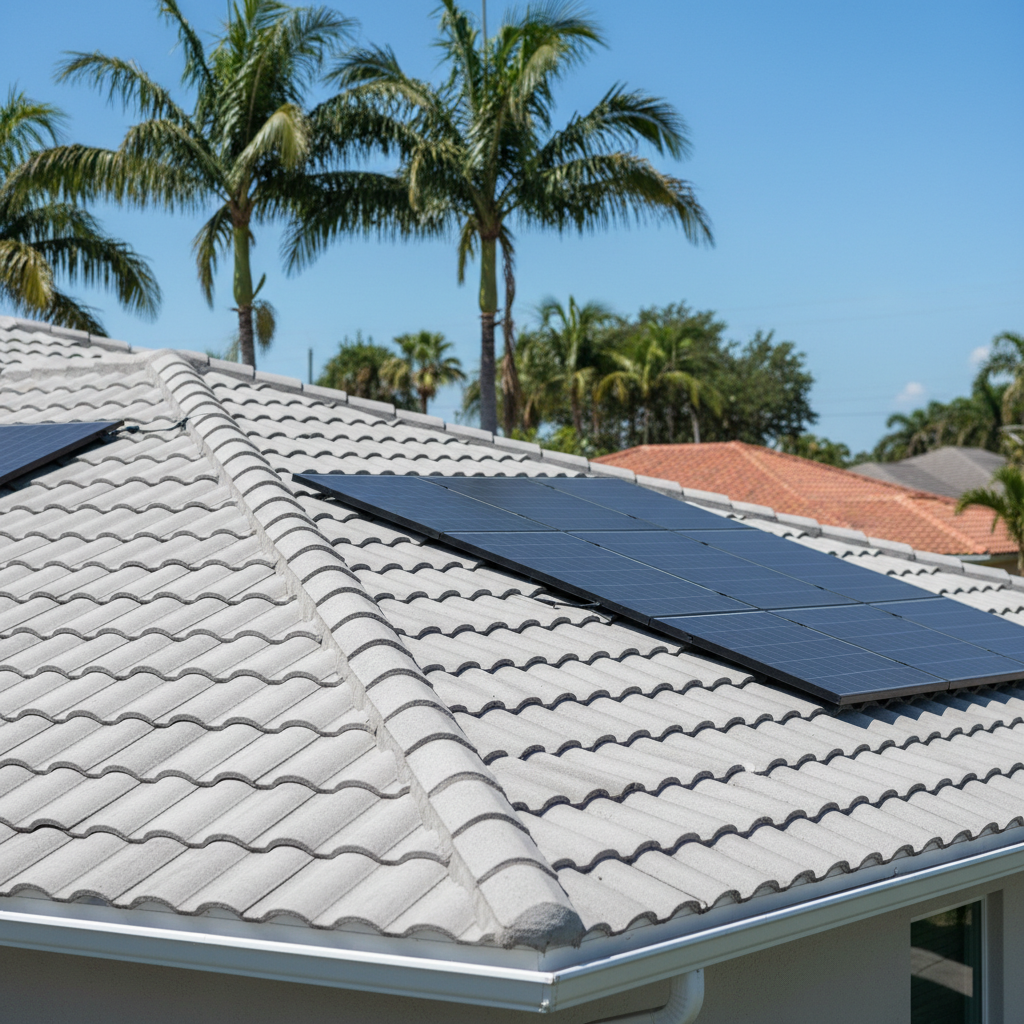
- Concrete and Clay Tiles: These are among the longest-lasting roofing materials, often exceeding 50 years nationally. In Florida, concrete and clay tile roofs frequently last 40-60+ years. They are exceptionally durable against high winds and provide excellent insulation. While the tiles themselves are extremely long-lasting, the underlayment beneath them will likely need replacement sooner, typically around the 20-30 year mark, to maintain the roof’s integrity.
How Florida’s Climate Accelerates Roof Aging
Beyond material choice, several environmental factors unique to Florida relentlessly test your roof’s resilience:
- Intense UV Radiation and Heat: Palm Bay experiences an abundance of sunshine year-round. This constant exposure to powerful ultraviolet (UV) rays and extreme heat is the primary culprit in accelerating roof degradation. It causes asphalt shingles to dry out, crack, and shed granules prematurely, and can fade and stress other materials over time.
- Heavy Rain and Humidity: Our frequent torrential downpours and high humidity create a breeding ground for algae, mold, and mildew. While not immediately damaging, these growths can trap moisture, lead to granule loss on shingles, and indicate underlying moisture issues if left unchecked. Persistent moisture can also lead to wood rot in the decking or fascia if the roof’s integrity is compromised.
- High Winds and Hurricanes: Florida is synonymous with hurricane season. The Florida Building Code mandates specific wind resistance for all new roof installations and replacements, requiring materials and fastening methods that can withstand severe gusts, often up to 130-150 mph for our coastal regions like Palm Bay. Even non-hurricane strength winds can lift shingles, loosen tiles, or damage flashing over time, creating vulnerabilities.
- Salt Air Exposure: For homes in Palm Bay, especially those closer to the coast, salt in the air can be a silent adversary. Salt accelerates the corrosion of metal fasteners, flashing, and other metallic components, potentially compromising the roof’s structural integrity over many years.
Key Warning Signs Your Roof is Nearing the End
Being proactive about roof maintenance means knowing what to look for. If your roof is approaching or has exceeded its expected lifespan, keep an eye out for these critical warning signs:
- Shingles: Granule loss (often visible in gutters), curling or buckling edges, cracking, or missing tabs are clear indicators of wear.
- Tiles: Cracked, chipped, or dislodged tiles not only look bad but can allow water penetration.
- Metal: Rust spots, loose panels, excessive denting, or peeling coatings suggest the protective layers are failing.
- General Signs: Leaks inside your home (even small stains on ceilings or walls), sagging areas on the roofline, dark streaks or moss growth (especially on north-facing slopes), and unusually high energy bills can all point to a roof that’s no longer performing efficiently.
What Palm Bay Homeowners Can Do to Extend Roof Life
While Florida’s climate is tough on roofs, there are many proactive steps you can take to maximize your roof’s lifespan and ensure it continues to protect your Palm Bay home for as long as possible. Neglecting these can significantly shorten even the most durable roof’s life.
-
Schedule Regular Professional Inspections
WHY: A professional eye can spot minor issues before they escalate into major, costly problems. Many problems start small and are invisible from the ground. Catching a loose shingle, compromised flashing, or early signs of moisture intrusion can save you thousands in repairs down the line.
HOW: We recommend an annual inspection, ideally in the spring before the intense summer heat and hurricane season begin. Additionally, always get a professional inspection after any significant storm event, even if you don’t see obvious damage.
-
Keep Gutters and Downspouts Clear
WHY: Clogged gutters cause water to back up, overflow, and pool around your roofline and foundation. This standing water can lead to fascia and soffit rot, compromise your roof’s edge, and even cause water to seep into your attic. Proper drainage is crucial for managing Florida’s heavy rainfall.
HOW: Regularly clear leaves, debris, and shingle granules from your gutters, especially after storms or during peak foliage seasons. Consider installing gutter guards to reduce the frequency of cleaning.
-
Trim Overhanging Trees and Branches
WHY: Tree branches that rub against your roof can abrade and wear down roofing materials over time. During storms, falling branches or entire trees pose a significant impact risk, leading to punctures or structural damage. Accumulated leaves and debris on the roof also trap moisture, promoting algae growth and premature material degradation.
HOW: Have a professional tree service trim branches that are within 5-10 feet of your roof. This not only protects your roof but also reduces the risk of storm-related damage to your entire home.
-
Address Repairs Promptly
WHY: In Florida’s climate, a small leak or a single missing shingle is not just a cosmetic issue; it’s an open invitation for water damage, mold, and accelerated deterioration of your roof decking and interior. What might be a simple repair today can quickly become an extensive, expensive issue if neglected.
HOW: If you notice any signs of damage, no matter how minor, contact Florida Roof Bros immediately. We can assess the situation and provide timely, effective repairs to prevent further damage.
-
Understand Your Roof Warranty
WHY: Your roof’s warranty is a critical document that outlines what is covered by the manufacturer and the installer. Knowing its terms, duration, and any conditions (like required maintenance) can protect your investment and ensure you’re covered if issues arise.
HOW: Keep your warranty documents in a safe place. Read through them to understand the coverage, what voids the warranty, and the process for filing a claim. If you’re unsure, ask your roofing professional for clarification.
-
Prepare for Hurricane Season (A Florida Essential)
WHY: Living in Palm Bay means living with hurricane season. Proactive preparation can significantly reduce the risk of extensive damage and expedite insurance claims if your roof is impacted. This includes both pre-season checks and post-storm actions.
HOW: Before June 1st, ensure your roof is in good condition with a professional check-up. Clear gutters, trim trees, and secure any loose items on your property. After a storm, conduct a visual inspection from the ground. If you suspect damage, contact us for a professional assessment and document everything with photos for your insurance company.
Frequently Asked Questions
How long does a shingle roof typically last in Palm Bay, FL?
In Palm Bay, traditional asphalt shingle roofs typically last between 15 to 20 years. The intense Florida sun, humidity, and frequent storm activity can accelerate wear and tear, often reducing the lifespan compared to cooler climates.
What factors most significantly reduce a roof’s lifespan in Florida?
The primary culprits are intense UV radiation from the sun, which degrades roofing materials over time, and severe weather events like hurricanes and tropical storms. High humidity also contributes to mold and algae growth, which can compromise the integrity of certain roofing types.
Is a metal roof a good investment for longevity in Florida’s climate?
Absolutely, metal roofs are an excellent investment for longevity in Florida. They are highly resistant to wind, hail, fire, and the sun’s harsh UV rays, often lasting 40-70 years or more with proper installation and minimal maintenance.
How often should I have my roof inspected in Palm Bay, especially after storms?
It is highly recommended to have your roof professionally inspected at least once a year, even if you don’t notice obvious damage. After any significant storm event, such as a tropical storm or hurricane, an immediate inspection is crucial to identify and address potential damage before it leads to larger issues.
What are the common signs that my roof in Florida needs to be replaced soon?
Common signs include missing, cracked, or curled shingles, significant granule loss on asphalt shingles, visible water stains on ceilings or walls, and excessive moss or algae growth. A sagging roof deck or daylight visible through your attic are also strong indicators of serious problems.
Do insurance companies in Florida offer discounts for certain types of roofs?
Yes, many insurance providers in Florida offer discounts for roofs that are more resilient to the state’s weather challenges. Metal roofs and roofs installed with enhanced wind mitigation features often qualify for lower premiums due to their increased durability against hurricanes and severe weather.
Can regular maintenance truly extend the life of my Florida roof?
Regular, proactive maintenance is one of the most effective ways to extend your Florida roof’s lifespan. This includes routine cleaning to prevent mold and algae, clearing gutters, trimming overhanging branches, and addressing minor repairs promptly to prevent them from escalating into major problems.
How does proper attic ventilation impact roof longevity in a hot climate like Palm Bay?
Proper attic ventilation is critical in Palm Bay’s hot climate because it helps regulate attic temperature and humidity. Good ventilation prevents heat buildup that can prematurely age roofing materials and reduces moisture accumulation that can lead to rot and mold, thereby extending your roof’s life.
Roofing Services Across Central Florida
Florida Roof Bros serves homeowners throughout Brevard County, Pinellas County, and surrounding Central Florida communities. If you need a roof inspection, repair, or replacement in any of these areas, our team is ready to help:
- Melbourne, FL Roofing
- West Melbourne, FL Roofing
- Rockledge, FL Roofing
- Vero Beach, FL Roofing
- Sebastian, FL Roofing
Protecting Your Palm Bay Home
Understanding how long your roof lasts in Florida is more than just knowing a number; it is about recognizing the unique challenges our climate presents and making informed decisions. While various factors influence a roof’s lifespan, from material choice to environmental exposure, the key takeaway is that proactive care and timely intervention are crucial for maximizing its durability and protecting your home.
Don’t wait for a small issue to become a major headache. If you are concerned about your roof’s condition, suspect storm damage, or simply want to know its remaining lifespan, a professional assessment is your best next step. Identifying potential problems early can save you significant time, stress, and money in the long run.
At Florida Roof Bros, we are committed to ensuring the safety and longevity of your home’s most important defense. We offer 100% free, no-obligation roof inspections, providing you with a comprehensive understanding of your roof’s current state and expert recommendations. Get peace of mind today by calling us.
Reach out to Florida Roof Bros for your complimentary inspection. Trust the Pros, Call the Bros at (321) 446-1702. We are here to help you protect your investment for years to come.
Need a free roof inspection? Call Florida Roof Bros at (321) 446-1702 or request a free inspection online. Family-owned, no subcontractors, Owens Corning Platinum Preferred. Trust the Pros, Call the Bros.
