

General Roofing
Location-Specific
Roofing
Palm Bay, FL Roofing: Protecting Your Home from Hurricane Season and Humidity
The air in Palm Bay carries a familiar weight, a thick blanket of humidity that settles over everything, especially after a sudden afternoon shower. It’s the kind of climate that defines life on Florida’s Space Coast, where the sun beats down with relentless intensity and the scent of salt air is never far from the breeze. For homeowners in Palm Bay, this unique environment isn’t just about comfortable living; it fundamentally shapes the lifespan and resilience of their most critical home defense: the roof. From the daily wear and tear of intense UV radiation to the ever-present threat of hurricane season, your roof faces challenges here that are unique to our coastal, subtropical setting.
Understanding these local climate factors is not just important, it’s essential for making informed decisions about your home’s protection. A roof built to withstand freezing winters in the north simply won’t cut it against the constant humidity, the salt-laden winds, or the punishing storms we experience in Brevard County. This post will delve into the specific environmental pressures that your Palm Bay roof endures, helping you understand why certain materials and construction methods are better suited for our area, and how to ensure your home remains a safe haven against Florida’s demanding weather.
When it comes to safeguarding your investment, you need a partner who truly understands the nuances of Palm Bay climate roofing. That’s where local expertise becomes invaluable. Our team at Florida Roof Bros, for example, brings over 25 years of combined experience specifically in this region, tackling everything from routine maintenance to post-hurricane repairs. We’ve seen firsthand what works and what doesn’t under the Florida sun and rain, ensuring that every project, from a minor repair to a full replacement, is executed with local conditions in mind. If you have immediate concerns about your roof, don’t hesitate to call us directly at (321) 446-1702.
Throughout this guide, we’ll explore how specific elements like prolonged humidity, corrosive salt air, and the sheer force of tropical storms impact different roofing materials over time. We’ll also touch upon the importance of adhering to local building codes, which are specifically designed to enhance resilience against these environmental challenges. Our goal is to equip you with the knowledge to make confident choices about your roof, ensuring it provides maximum protection and longevity for your Palm Bay home, year after year, storm after storm.
Choosing the right roofing solution isn’t just about aesthetics or initial cost; it’s about long-term peace of mind and the safety of your family. With the right materials and expert installation, your roof can stand strong against the elements, providing reliable shelter through every season. We believe in transparency and education, empowering you to understand the critical role your roof plays and how to best maintain its integrity in our challenging climate.
Understanding Florida’s Unique Climate Impact on Roofing
Florida’s climate, particularly in Central Florida and coastal areas like Palm Bay, presents a formidable challenge to roofing systems unlike almost anywhere else in the continental U.S. It’s a relentless combination of high temperatures, pervasive humidity, corrosive salt air, and the seasonal threat of tropical storms and hurricanes. Each of these factors contributes to a unique form of wear and tear, demanding specific materials and construction techniques to ensure a roof’s longevity and performance.
The constant, intense ultraviolet (UV) radiation from the Florida sun is a primary culprit for material degradation. UV rays break down the bonds in asphalt shingles, causing them to dry out, crack, and lose their protective granules prematurely. This process weakens the shingle’s ability to shed water and protect the underlying structure. For other materials like metal, while more resistant to UV, the sun’s heat causes expansion and contraction cycles that can stress fasteners and seams over time, leading to potential leaks if not properly installed.
Humidity, a defining characteristic of our state, creates an ideal breeding ground for mold, mildew, and algae on roof surfaces. These growths not only detract from a roof’s appearance but can also trap moisture, accelerate material breakdown, and even compromise the protective layers of certain roofing types. Proper ventilation in the attic space is crucial here, as it helps to regulate temperature and reduce moisture buildup, extending the life of the entire roofing system and improving energy efficiency.
For homes closer to the coast in Palm Bay and other Brevard County communities, salt air adds another layer of corrosive damage. Airborne salt particles can settle on roofing materials and fasteners, accelerating rust and material deterioration, especially for metal components. This necessitates the use of corrosion-resistant fasteners and coatings on metal roofs, and careful material selection for any exposed elements. Understanding these localized impacts is key to selecting a truly durable roofing solution.
Of course, the most dramatic and widely recognized threat is hurricane season. High winds, often exceeding 100 mph, can lift, tear, and completely remove roofing materials. The torrential rains that accompany these storms can exploit even the smallest vulnerabilities, leading to widespread water damage inside the home. Florida’s building codes, particularly the Florida Building Code, are among the most stringent in the nation, specifically designed to mitigate these hurricane risks. These codes dictate everything from the type of fasteners used to the specific installation methods for different roofing materials, ensuring maximum resistance to uplift and water intrusion.
Navigating these complex climate factors and building code requirements requires deep local knowledge and experience. As an Owens Corning Platinum Preferred Contractor, we understand the importance of using high-quality materials specifically engineered for Florida’s environment, combined with meticulous installation practices. Our in-house crews, not subcontractors, ensure that every roof we install or repair meets these rigorous standards, providing Palm Bay homeowners with a robust and resilient roofing system that stands up to everything our unique climate throws at it. This commitment to quality and local expertise is why we maintain an A+ rating with the BBB and boast over 300 five-star Google reviews from satisfied customers across Brevard County and Central Florida.
Navigating Palm Bay’s Unique Roofing Challenges and Solutions
Understanding Palm Bay’s Climate: Humidity, Salt Air, and Hurricane Season Impacts on Roofs
Palm Bay, nestled along Florida’s Space Coast, experiences a subtropical climate that presents distinct challenges for any roofing system. The relentless humidity, often hovering above 70%, creates an ideal breeding ground for mold, mildew, and algae, which can rapidly degrade roofing materials like asphalt shingles and even compromise underlying decking. Beyond the moisture, our proximity to the Atlantic Ocean means constant exposure to salt-laden air, which accelerates corrosion on metal components, fasteners, and can break down the protective granules on shingles over time, shortening a roof’s effective lifespan.
However, the most formidable threat to Palm Bay roofs remains hurricane season, running from June 1st to November 30th. Even a Category 1 hurricane, with sustained winds of 74-95 mph, can cause significant damage, leading to shingle uplift, granule loss, and water intrusion. Stronger storms, like a Category 3 (111-129 mph) or higher, pose an extreme risk, capable of tearing off entire sections of a roof, compromising structural integrity, and exposing your home to catastrophic water damage. Preparing for these conditions is not just recommended; it is essential for protecting your investment.
Navigating Palm Bay & Brevard County Building Codes for Climate Resilience
Given these severe environmental factors, Florida has some of the most stringent building codes in the nation, and Brevard County rigorously enforces them to ensure homes can withstand hurricane-force winds. The Florida Building Code (FBC), specifically the 7th Edition (2020), mandates enhanced roof system requirements that go far beyond national averages. These include specific wind resistance ratings for materials, strict fastening schedules for decking and underlayment, and the critical requirement of a secondary water barrier (SWB) to provide an additional layer of protection against water intrusion even if the primary roof covering is compromised.
For any re-roofing project in Palm Bay, adherence to these codes is non-negotiable and paramount for your home’s safety and insurability. For instance, the FBC requires roofs to be built to withstand specific wind loads, often requiring 8d nails spaced at 6 inches on center for decking, and precise nailing patterns for shingles. A properly installed SWB, typically a self-adhering modified bitumen membrane or two layers of felt with hot-mopped asphalt, ensures that even if shingles are blown off, your home remains largely protected from water damage, a crucial defense in our hurricane-prone region.
Local Roof Types and Materials: Best Choices for Durability Against Palm Bay’s Weather
Choosing the right roofing material is critical for longevity and performance in Palm Bay’s challenging climate. While various options exist, some stand out for their resilience against humidity, salt air, and hurricanes:
- Architectural Shingles: Also known as dimensional or laminate shingles, these are a popular choice due to their aesthetic appeal and improved durability over traditional 3-tab shingles. High-quality architectural shingles, especially those with impact resistance ratings (e.g., UL 2218 Class 4) and high wind ratings (e.g., 130 mph), can offer excellent protection. While a standard shingle roof might last 25-30 years in milder climates, in Palm Bay, you can typically expect 15-20 years before significant wear from sun, humidity, and storm cycles necessitates replacement.
- Standing Seam Metal Roofs: This is arguably one of the best investments for a Palm Bay home. Standing seam metal roofs are exceptionally durable, highly resistant to wind uplift, and virtually impervious to mold, mildew, and salt corrosion. Their interlocking panels create a robust, watertight barrier that can withstand hurricane-force winds up to 150 mph or more. With proper installation, a standing seam metal roof can last 40-60 years or even longer, significantly outperforming traditional asphalt shingles in our climate.
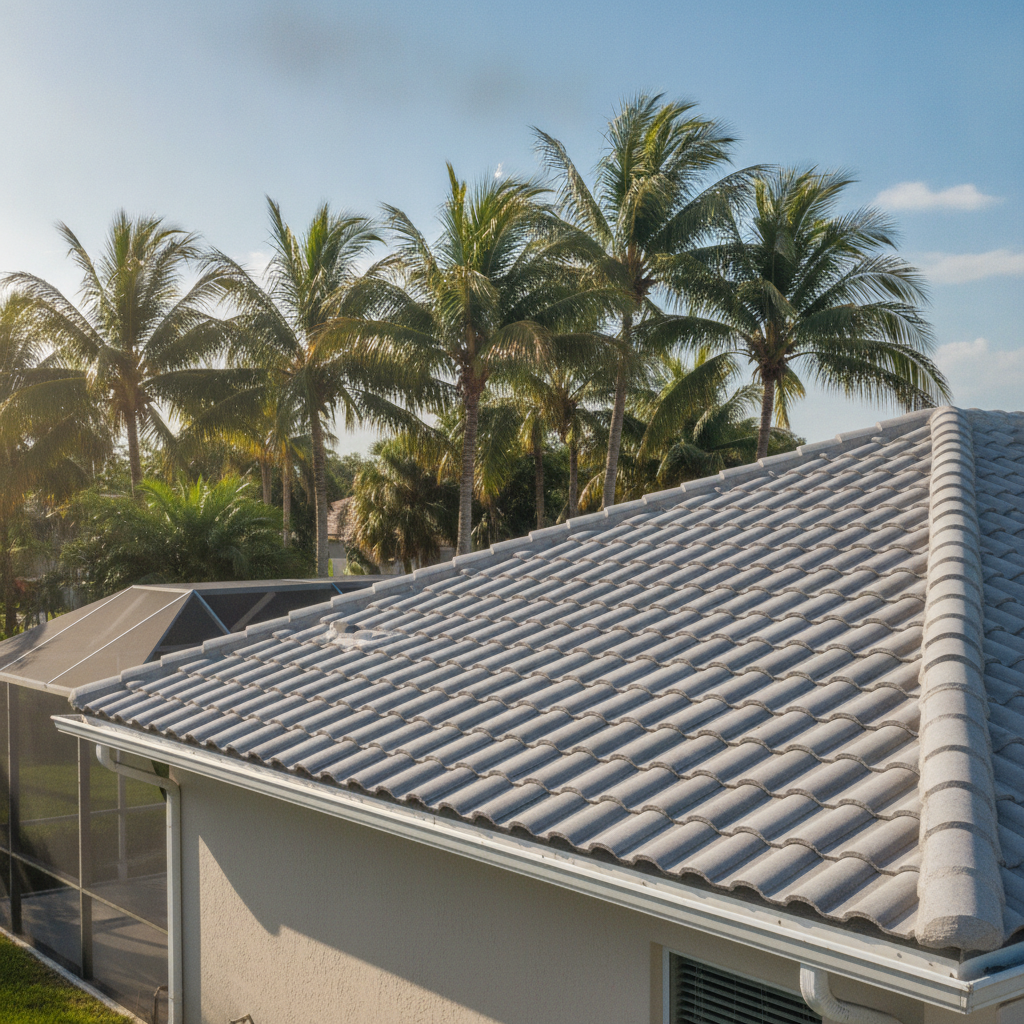
- Concrete and Clay Tiles: For homeowners seeking a distinct aesthetic and superior longevity, concrete and clay tiles are an excellent option. These materials are incredibly durable, offering exceptional resistance to fire, hail, and high winds. Their mass provides natural insulation, and they are impervious to rot, mold, and insect infestation. While the initial investment is higher, tile roofs boast a lifespan of 50-70 years or more, making them a long-term, low-maintenance solution for Palm Bay’s harsh conditions.
At Florida Roof Bros, we understand these local nuances better than anyone. Our deep experience in Palm Bay and Brevard County means we don’t just install roofs; we engineer roofing systems specifically designed to thrive in our unique climate. We meticulously adhere to all Florida Building Code requirements, utilize materials proven to withstand local conditions, and ensure every installation provides the maximum possible protection for your home and family. Our local expertise is your greatest asset in safeguarding your property against the elements.
What Palm Bay Homeowners Should Do: Practical Guidance for Roof Longevity
- Schedule Regular Professional Roof Inspections.
Even if you don’t see obvious damage, Palm Bay’s climate can cause insidious problems. Humidity fosters mold and mildew, salt air corrodes, and hurricane season constantly tests your roof’s integrity. A professional inspection every 1-2 years allows for early detection of issues like granule loss, cracked shingles, corroded flashing, or minor leaks before they escalate into costly repairs. Early intervention saves money and extends your roof’s life.
- Maintain Your Gutters and Drainage System.
Clear gutters are crucial in Florida’s heavy rainfalls. Clogged gutters cause water to back up, leading to fascia rot, soffit damage, and water pooling on your roof, which accelerates shingle degradation and can lead to leaks. Regularly clear leaves and debris, especially after storms, and ensure downspouts direct water away from your foundation to prevent costly water damage to your home’s exterior and interior.
- Trim Overhanging Trees and Vegetation.
Before hurricane season, and throughout the year, ensure all tree branches are trimmed at least 6-10 feet away from your roof. Overhanging branches can scratch and damage shingles, drop debris that clogs gutters, and provide easy access for pests. More critically, during high winds, these branches can become destructive projectiles, causing significant damage to your roof and home.
- Understand Your Homeowner’s Insurance Policy.
Florida’s insurance market is unique, especially concerning hurricane coverage. Review your policy annually to understand your hurricane deductible (often a percentage of your home’s value, not a flat dollar amount), specific coverage for wind and water damage, and any timelines for filing claims after a storm. Document your roof’s condition with photos and videos before hurricane season to aid in any potential claims.
- Prioritize Proper Attic Ventilation.
Humidity is a constant enemy in Palm Bay. Poor attic ventilation traps hot, moist air, leading to excessive heat buildup and condensation. This can warp roof decking, promote mold growth in your attic, and prematurely age your roofing materials from the inside out. Ensure you have adequate soffit and ridge vents to allow for continuous airflow, reducing attic temperatures and extending your roof’s lifespan while also lowering your energy bills.
- Invest in Climate-Resistant Roofing Materials.
When it’s time for a new roof, don’t just replace it with the cheapest option. Consider materials specifically designed for Florida’s climate, such as high-wind-rated architectural shingles, standing seam metal, or concrete tiles. These materials offer superior durability against hurricanes, salt air, and humidity, providing enhanced protection and a longer lifespan compared to standard options, ultimately saving you money and stress in the long run.
- Choose a Reputable, Local Roofing Contractor.
For any roofing work, always select a licensed and insured local contractor with a strong track record in Palm Bay and Brevard County. Local roofers like Florida Roof Bros are intimately familiar with the Florida Building Code, local permitting processes, and the specific challenges our climate presents. They understand which materials perform best here, can provide local references, and will be around to honor warranties, offering peace of mind that an out-of-town storm chaser cannot.
Frequently Asked Questions
What roofing materials are most recommended for hurricane resistance in Palm Bay, FL?
For superior hurricane resistance in Palm Bay, FL, metal roofing and concrete or clay tiles are highly recommended due to their exceptional durability against high winds and impact. Certain types of asphalt shingles, specifically those rated for high wind speeds and installed according to stringent Florida Building Code requirements, also offer excellent protection. These materials are designed to withstand the harsh conditions of Florida’s hurricane season, providing long-lasting security for your home.
How does the high humidity in Palm Bay, FL impact my roof’s longevity?
The persistent high humidity in Palm Bay, FL, significantly impacts your roof’s longevity by creating an ideal environment for mold, mildew, and algae growth, especially on asphalt shingles. This biological growth not only detracts from your home’s curb appeal but can also degrade roofing materials over time, leading to granular loss and premature aging. Furthermore, prolonged moisture can penetrate through tiny cracks or poorly ventilated areas, potentially causing rot in the underlying roof decking and structural components.
What are the tell-tale signs of hurricane damage I should look for on my Palm Bay roof?
After a hurricane in Palm Bay, homeowners should look for several key signs of damage, including missing, curled, or creased shingles, which indicate wind uplift. Inspect for dents or punctures on metal roofs, and cracks or dislodged tiles on tile roofs. Inside your home, water stains on ceilings or walls are clear indicators of a compromised roof structure. It is crucial to also check for damaged gutters, fascia, or soffit, as these often reveal underlying roof issues that require immediate professional assessment.
Will my homeowner’s insurance cover roof replacement after hurricane damage in Florida?
Homeowner’s insurance policies in Florida typically cover roof replacement due to hurricane damage, but the extent of coverage can vary significantly based on your specific policy, deductible, and the age of your roof. Many policies include a separate hurricane deductible, which can be a percentage of your home’s insured value, and some may apply depreciation for older roofs. It is essential to review your policy details carefully and contact your insurance provider promptly after any storm damage to understand your specific benefits and claims process.
How frequently should homeowners in Palm Bay, FL, schedule professional roof inspections?
Homeowners in Palm Bay, FL, should ideally schedule professional roof inspections at least once a year, even if there are no visible signs of damage. Given the severe weather conditions, including intense sun, heavy rains, and the constant threat of hurricanes, annual inspections are crucial for early detection of potential issues. Additionally, it is highly recommended to have your roof professionally inspected immediately following any significant storm or hurricane to assess for hidden damage that might not be apparent from the ground, preventing minor problems from escalating.
Roofing Services Across Central Florida
Florida Roof Bros serves homeowners throughout Brevard County, Pinellas County, and surrounding Central Florida communities. If you need a roof inspection, repair, or replacement in any of these areas, our team is ready to help:
- Melbourne, FL Roofing
- West Melbourne, FL Roofing
- Rockledge, FL Roofing
- Vero Beach, FL Roofing
- Sebastian, FL Roofing
Protecting Your Palm Bay Home: Your Next Step
Navigating the challenges of Palm Bay’s climate, from the intense sun and humidity to the formidable hurricane season, demands a robust and resilient roofing system. We’ve explored the importance of choosing the right materials, understanding the impact of environmental factors, and recognizing the signs of damage. Ultimately, a well-maintained and professionally installed roof is your home’s primary defense, safeguarding your property and providing invaluable peace of mind against Florida’s unique weather patterns.
Don’t wait for a small issue to become a major problem, especially when your home’s protection is at stake. Proactive roof care and timely repairs are essential for extending the life of your roof and ensuring its peak performance. Whether you suspect storm damage, notice signs of wear, or simply want to ensure your roof is ready for the next hurricane season, Florida Roof Bros is here to provide expert guidance and unparalleled service.
Take the crucial step towards securing your home’s future today. Florida Roof Bros offers 100% free, no-obligation roof inspections, providing you with a comprehensive assessment and transparent recommendations. Our experienced team is dedicated to delivering quality workmanship and reliable solutions tailored to your Palm Bay home. For dependable roofing services you can trust, call us now at (321) 446-1702. Trust the Pros, Call the Bros , your roof will thank you.
Need a free roof inspection? Call Florida Roof Bros at (321) 446-1702 or request a free inspection online. Family-owned, no subcontractors, Owens Corning Platinum Preferred. Trust the Pros, Call the Bros.
