

General Roofing
Location-Specific
Roofing
Malabar, FL Storm History: How Past Hurricanes Shape Today’s Roofing Choices
The distant rumble of thunder, a sudden downpour, or the ominous swirl of a hurricane graphic on the local news channel are all too familiar experiences for anyone living in Malabar. Each season brings a fresh reminder of Florida’s unique and sometimes challenging climate, especially when it comes to the integrity of our homes. For residents of Malabar, understanding the relentless forces of nature that have shaped our community over decades is not just historical curiosity, but a critical part of making informed decisions about property protection.
Your roof, often out of sight, is your home’s primary defense against these elements, from the intense summer sun and daily afternoon deluges to the powerful winds and torrential rains of a tropical storm or hurricane. This post will help you understand how Malabar’s rich storm history directly influences the best roofing choices for your property today. We’ll explore how past events have paved the way for current building standards and what that means for ensuring your home stands strong for years to come.
Living in Malabar means appreciating both its natural beauty and its vulnerability to severe weather. The Indian River Lagoon nearby, while picturesque, also plays a role in localized weather patterns, sometimes amplifying the effects of broader storm systems. This unique environmental cocktail makes the long-term durability of your roofing system a paramount concern, going beyond just aesthetic appeal to genuine structural resilience.
When you consider a new roof or repairs, you’re not just picking shingles; you’re investing in a shield against the next storm. The insights gleaned from decades of Florida weather, particularly in areas like Brevard County, have taught us invaluable lessons about what works and what doesn’t. Knowing this history helps homeowners in Malabar make smart, proactive choices that protect their families and their most significant asset.
At Florida Roof Bros, we live and work right here in Brevard County, and our family has witnessed firsthand the impact of these storms. With over 25 years of combined experience and a commitment to using only our in-house, expert crews, we understand the specific challenges Malabar homeowners face. We’re here to help you navigate those choices, ensuring your roof is built to withstand the elements, backed by our local expertise and certified quality. Don’t hesitate to call us at (321) 446-1702 for a consultation.
Every homeowner’s situation is unique, but the underlying principles of storm-resistant roofing remain consistent across our region. From the materials chosen to the installation techniques employed, every detail matters when you’re building or repairing a roof designed to last in Florida’s demanding climate. This introduction sets the stage for a deeper dive into the specific historical events and their lasting impact on roofing practices in Malabar.
Florida’s Climate and the Evolution of Roofing Standards
Florida’s climate is characterized by its subtropical to tropical nature, bringing with it high humidity, intense ultraviolet (UV) radiation, and a hurricane season that runs from June through November. These factors combine to create an exceptionally harsh environment for any roofing system. The constant exposure to moisture accelerates the growth of mold and mildew, while relentless UV rays break down roofing materials over time, leading to premature aging and failure.
Beyond the daily wear and tear, the most significant threat to roofs in Malabar and across the state comes from severe weather events, primarily hurricanes and tropical storms. These storms bring a devastating combination of high winds, often exceeding 100 miles per hour, and torrential rainfall. The wind forces create immense uplift pressure on roofs, attempting to peel them away from the structure, while heavy rain seeks out any vulnerability, leading to leaks and interior damage.
The lessons learned from major hurricane events, particularly Hurricane Andrew in 1992, were pivotal in reshaping Florida’s building codes. Before Andrew, roofing standards varied significantly, and many homes were simply not built to withstand such extreme forces. The widespread devastation prompted a complete overhaul of the state’s construction regulations, leading to the creation of the rigorous Florida Building Code.
The Florida Building Code, particularly its High-Velocity Hurricane Zone (HVHZ) provisions, sets some of the strictest roofing requirements in the nation. For homeowners in Malabar and throughout Brevard County, this means that new roof installations or significant repairs must adhere to these enhanced standards. These codes mandate specific fastening schedules, stronger underlayment, and impact-resistant materials designed to keep the roof system intact under severe wind loads.
Understanding these evolved building codes is crucial, not just for compliance but for ensuring the longevity and resilience of your roof. Installing a roof that meets or exceeds current Malabar and Brevard County codes offers superior protection, potentially reducing insurance premiums, and significantly extending the lifespan of your roofing system. It’s an investment that pays dividends in peace of mind and structural integrity.
The materials themselves have also advanced significantly in response to Florida’s climate and codes. Today, homeowners have access to shingles, tiles, and metal roofing options that are specifically engineered to resist high winds, intense UV exposure, and moisture intrusion. These modern materials, combined with expert installation techniques that adhere to strict code requirements, provide a level of protection previously unavailable to Florida residents, directly addressing the vulnerabilities exposed by past storm events.
Malabar’s Roofs: A Deep Dive into Climate, Codes, and Construction
Malabar, nestled along Florida’s Space Coast, experiences a unique blend of environmental factors that significantly challenge roofing systems. Our history of tropical storms and hurricanes, from the near-misses of Hurricane Matthew in 2016 and Hurricane Dorian in 2019 to the direct impact of Hurricane Irma in 2017 and Hurricane Nicole in 2022, has taught us invaluable lessons about roof resilience. These events consistently highlight vulnerabilities such as shingle uplift and detachment, flashing failures around chimneys and vents, and widespread water intrusion, often leading to costly interior damage and mold growth. Understanding these recurring issues is the first step toward building a truly durable roof.
Beyond the direct force of hurricane winds, Malabar’s climate presents a constant assault on roofing materials. High humidity, often exceeding 90% during summer months, accelerates the growth of algae, moss, and mildew, which can degrade asphalt shingles and compromise their protective granules. The proximity to the Indian River Lagoon and the Atlantic Ocean means roofs are exposed to salt-laden air, which can corrode metal components like fasteners and flashing, and break down sealants over time. Furthermore, Florida’s intense UV radiation and extreme heat cycles cause materials to expand and contract repeatedly, leading to premature aging, cracking, and a reduced lifespan compared to national averages.
Evolving Building Codes for Unyielding Protection
In response to decades of hurricane damage across the state, Florida has developed some of the most stringent building codes in the nation. The Florida Building Code (FBC), updated every three years, dictates everything from roof deck attachment to secondary water barriers and material wind ratings. While Malabar is not within a High-Velocity Hurricane Zone (HVHZ) like Miami-Dade and Broward counties, Brevard County and Malabar still adhere to robust FBC standards, currently the 7th Edition (2020), which mandates roofing systems designed to withstand significant wind loads. These codes require specific fastening patterns, enhanced underlayment systems, and materials certified for high wind resistance, ensuring that a new roof installed today is far more resilient than one from even 15-20 years ago.
- Wind Resistance: Modern shingles must meet ASTM D3161 Class F (110 mph) or ASTM D7158 Class H (150 mph) wind resistance. Metal and tile roofs often exceed these ratings.
- Secondary Water Barrier (SWB): A critical code requirement, the SWB (typically a self-adhering modified bitumen underlayment) provides a waterproof layer directly over the roof deck, protecting your home from water intrusion even if the primary roofing material is compromised during a storm.
- Fastening Schedules: Specific nail types, lengths, and patterns are mandated for roof deck attachment and shingle installation to prevent blow-offs in high winds.
Common Roofing Materials and Their Malabar Performance
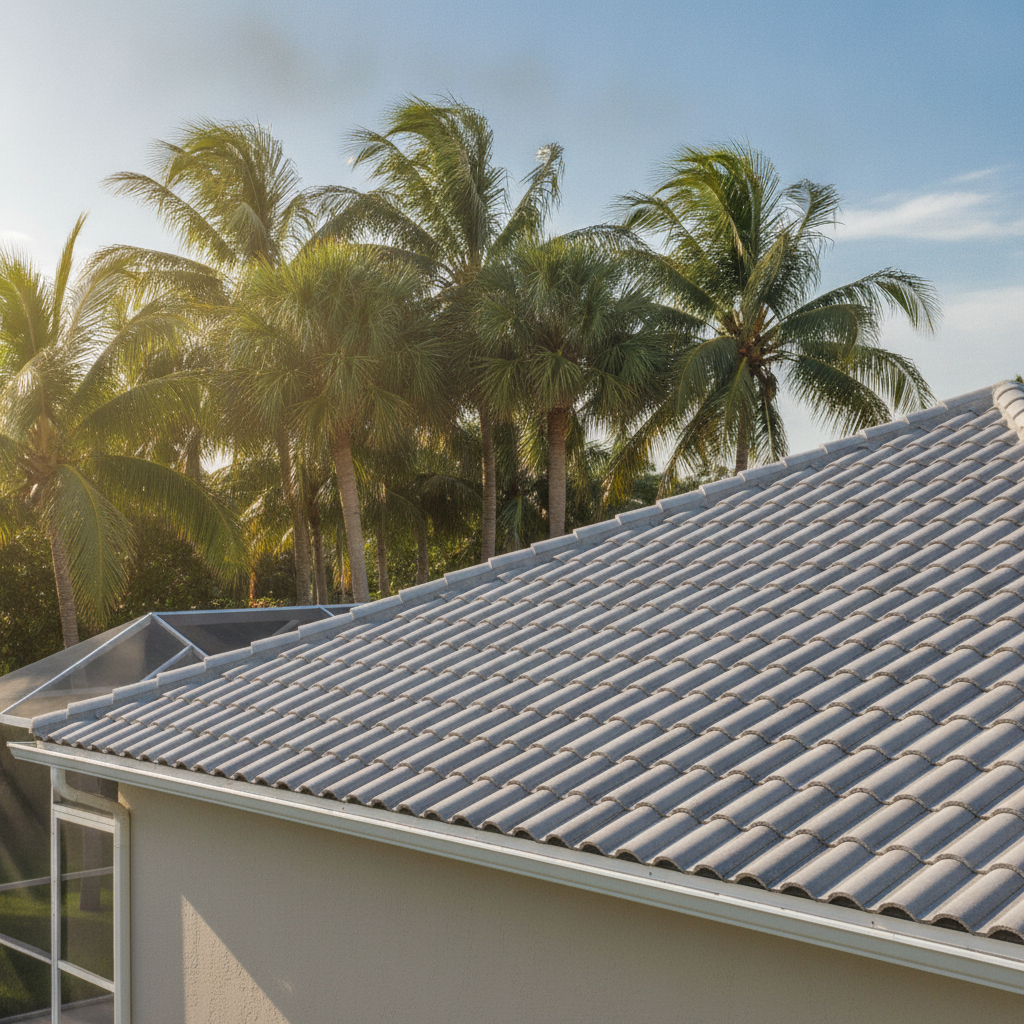
Choosing the right roofing material in Malabar involves balancing aesthetics, budget, and long-term performance against the local climate. Architectural shingles, also known as dimensional shingles, are the most common choice due to their affordability and versatility, offering a lifespan of 25-30 years under ideal conditions. However, in Florida’s harsh environment, their practical lifespan often falls to 15-20 years. Standing seam metal roofs, while a higher initial investment typically ranging from $18-25 per square foot installed, offer superior wind resistance, energy efficiency, and a lifespan of 30-50+ years, making them an increasingly popular choice for their durability and low maintenance. Concrete and clay tiles, ranging from $20-35 per square foot installed, are incredibly durable, boasting lifespans of 50 years or more and excellent resistance to wind and fire, though their weight requires robust roof decking and framing.
Each material has its pros and cons in Malabar. Shingles are cost-effective but require more frequent replacement. Metal roofs excel in durability and wind resistance but have a higher upfront cost. Tiles are exceptionally long-lasting but are heavy and can be brittle under impact. Understanding these characteristics and how they interact with Malabar’s specific weather patterns is crucial for making an informed decision that protects your investment for decades to come.
The Indispensable Value of a Local Malabar Roofer
When it comes to roof repairs or replacements in Malabar, selecting a local roofing contractor like Florida Roof Bros is not just a convenience; it’s a necessity. A local roofer is intimately familiar with Malabar’s specific storm history, common damage patterns, and the nuances of Brevard County’s building codes. We understand which materials perform best under local conditions, how to navigate the permitting process efficiently, and can provide timely service when you need it most, especially after a storm. Our team lives and works in this community, giving us a vested interest in providing durable, code-compliant solutions that stand the test of time and protect our neighbors’ homes. This local expertise translates directly into a higher quality installation and peace of mind for homeowners.
Protecting Your Malabar Home: Practical Roofing Guidance
For Malabar homeowners, a robust roof is your primary defense against the elements. Proactive maintenance and informed decisions are key to extending its lifespan and ensuring your home remains safe and dry. Here are actionable steps you can take to protect your investment, backed by local expertise.
-
Schedule Annual Professional Roof Inspections:
WHY: Regular inspections, ideally every 12-18 months, are crucial for identifying minor issues before they escalate into major, costly repairs. Florida’s intense sun, humidity, and sudden storms can rapidly degrade materials, loosen fasteners, and cause subtle leaks that are invisible from the ground. Catching issues like cracked or missing shingles, deteriorated flashing, or early signs of algae growth early can save you thousands.
HOW: Hire a reputable local roofing contractor. A professional inspection typically costs between $150-$300 and includes a detailed assessment of your roof’s condition, attic ventilation, and potential vulnerabilities. They can spot problems you might miss and recommend targeted repairs, such as sealing minor cracks or replacing a few damaged shingles, which might only cost a few hundred dollars versus a full roof replacement.
-
Understand Your Homeowner’s Insurance Policy:
WHY: Florida’s insurance landscape is complex, especially regarding hurricane and wind damage. Knowing your coverage limits, deductibles (especially separate hurricane deductibles, which can be 2-10% of your dwelling coverage), and the specific timelines for filing claims is critical. Many policies have strict deadlines, often within 1-2 years from the date of loss, for reporting and completing repairs.
HOW: Review your policy annually with your insurance agent. Ask specific questions about roof damage coverage, replacement cost value (RCV) vs. actual cash value (ACV), and what documentation is required for a claim. In the event of storm damage, contact your insurer immediately, document everything with photos and videos, and keep detailed records of all communications.
-
Invest in High-Quality, Code-Compliant Materials:
WHY: While upfront costs might be slightly higher, choosing roofing materials that meet or exceed Florida Building Code standards for wind resistance and durability will significantly extend your roof’s lifespan and provide superior protection. Cheaper materials degrade faster under Florida’s sun and heat, leading to premature failure and more frequent replacements.
HOW: When getting a new roof, insist on materials with high wind ratings (e.g., architectural shingles rated for 130 mph or higher, or standing seam metal with concealed fasteners). Ensure a secondary water barrier is installed beneath your primary roofing material. Ask your roofer for product specifications and warranties, and verify that they are using FBC-approved products for Malabar installations.
-
Prioritize Proper Attic Ventilation:
WHY: Florida’s intense heat can superheat your attic, leading to several problems:
- Premature Roof Aging: Excessive heat bakes your shingles from underneath, accelerating their degradation and reducing their lifespan.
- Increased Energy Bills: A hot attic transfers heat into your living space, making your AC work harder and increasing cooling costs.
- Moisture and Mold: Poor ventilation can trap humidity, leading to condensation, wood rot, and mold growth in your attic and roof deck.
HOW: Ensure your attic has a balanced ventilation system with adequate intake (soffit vents) and exhaust (ridge vents, static vents, or powered attic fans). A professional roofer can assess your current ventilation and recommend improvements, which might involve adding or clearing vents, or installing a solar-powered attic fan for optimal airflow. This can cost anywhere from $300-$1000 depending on the scope.
-
Maintain Gutters and Downspouts:
WHY: Clogged gutters prevent proper water drainage, causing water to pool on your roof, overflow onto fascia boards, or seep into your foundation. This can lead to wood rot, fascia damage, soil erosion around your home, and even foundation issues. Standing water also encourages mosquito breeding and can contribute to algae growth on your roof.
HOW: Clean your gutters at least twice a year, or more frequently if you have large trees nearby. Remove leaves, twigs, and debris. Ensure downspouts are clear and direct water at least 5-10 feet away from your home’s foundation. Consider installing gutter guards to reduce maintenance, which can cost $5-$15 per linear foot installed.
-
Document Your Roof’s Condition Regularly:
WHY: Comprehensive documentation is your best friend when filing an insurance claim after a storm. Having clear, dated photos and videos of your roof’s condition *before* any damage occurs can significantly expedite your claim and prevent disputes with your insurance company about pre-existing damage.
HOW: Take clear, high-resolution photos and videos of all sides of your roof, including close-ups of valleys, flashing, and any existing minor wear. Store these securely in the cloud or on an external drive. Update this documentation annually and immediately after any significant storm, even if you don’t see visible damage. Keep all receipts for roof maintenance and repairs, as this demonstrates due diligence.
Frequently Asked Questions
What are the most hurricane-resistant roofing materials recommended for homes in Malabar, FL?
For homes in hurricane-prone areas like Malabar, FL, metal roofing and concrete or clay tile roofs are highly recommended due to their exceptional durability and resistance to high winds and impact. These materials not only withstand severe weather but also often come with extended warranties, offering long-term protection. Advanced asphalt shingles, particularly those rated for higher wind speeds and installed with enhanced fastening techniques, also offer robust protection, making them a popular choice for many homeowners. Choosing materials with a proven track record against Florida’s severe weather is crucial for long-term peace of mind and property value.
How frequently should homeowners in Malabar, FL have their roofs inspected, especially after a significant storm?
It is strongly advised for Malabar homeowners to have their roofs professionally inspected at least once a year, ideally before hurricane season begins in June. Furthermore, following any named storm or significant weather event, even if no obvious damage is visible from the ground, a thorough inspection is critical. Wind, rain, and debris can cause hidden damage that may not immediately lead to leaks but can compromise your roof’s structural integrity over time. Early detection of minor issues can prevent them from escalating into costly major repairs down the line, saving you stress and expense.
Will my homeowner’s insurance policy in Malabar, FL typically cover roof damage caused by hurricanes?
Most standard homeowner’s insurance policies in Florida do include coverage for roof damage from hurricanes, but it’s essential to understand your specific policy details, as coverage can vary significantly. Many policies have a separate hurricane deductible, which is often a percentage of your home’s insured value, and can be significantly higher than your standard deductible. It’s crucial to know what this means for your out-of-pocket expenses. We highly recommend reviewing your policy annually and consulting with your insurance provider to clarify your specific coverage, deductibles, and any limitations that may apply to hurricane-related roof damage.
What are the common signs of hurricane-related roof damage Malabar, FL homeowners should look for?
After a hurricane, Malabar homeowners should diligently look for missing, cracked, or curled shingles, especially on the windward side of the roof where wind uplift is strongest. Granules accumulating in gutters, dents or punctures from flying debris, and any signs of water stains or leaks inside your home are also critical indicators of potential damage. Even subtle damage, like creased shingles or loosened flashing, can compromise your roof’s integrity and lead to future problems. Always prioritize a professional assessment, as some damage is not visible from the ground.
Are there specific building codes for roofs in Malabar, FL that address hurricane preparedness?
Yes, Florida has some of the strictest building codes in the nation, particularly concerning hurricane resistance, and these robust standards apply directly to Malabar. These codes dictate everything from the type of fasteners used to the specific installation methods for various roofing materials, ensuring maximum wind uplift resistance and overall structural integrity. Any new roof installation or major repair must adhere to the latest Florida Building Code requirements, which are regularly updated based on scientific research and past storm experiences. These codes are designed to significantly enhance your home’s resilience against severe weather, protecting your investment and your family.
Roofing Services Across Central Florida
Florida Roof Bros serves homeowners throughout Brevard County, Pinellas County, and surrounding Central Florida communities. If you need a roof inspection, repair, or replacement in any of these areas, our team is ready to help:
- Palm Bay, FL Roofing
- Melbourne, FL Roofing
- West Melbourne, FL Roofing
- Rockledge, FL Roofing
- Vero Beach, FL Roofing
Conclusion & Next Steps
The rich storm history of Malabar, FL, serves as a powerful reminder that proactive roofing choices are not just about aesthetics, but about fundamental protection for your home and family. Understanding the lessons learned from past hurricanes empowers homeowners to make informed decisions about materials, maintenance, and expert support. Investing in a resilient roof, compliant with Florida’s stringent building codes, is the most effective way to safeguard your property against the inevitable challenges of future storm seasons.
At Florida Roof Bros, we deeply understand the unique roofing needs of Malabar residents, shaped by decades of hurricane activity. We believe that peace of mind begins with a roof you can trust. If you’re concerned about your roof’s current condition, its age, or its ability to withstand the next big storm, don’t wait for damage to become apparent. Taking proactive steps now can save you significant stress and expense in the long run, ensuring your home remains a safe haven.
We are committed to providing Malabar homeowners with reliable, high-quality roofing solutions designed to stand up to Florida’s toughest weather. As part of our dedication to your safety and satisfaction, Florida Roof Bros offers 100% free, no-obligation roof inspections. Our experienced team will thoroughly assess your roof, identify any potential vulnerabilities, and provide clear, honest recommendations tailored to your specific situation and the local climate. It’s time to ensure your home is fully prepared for whatever comes next.
Don’t leave your home’s protection to chance. Take the first step towards a stronger, more secure roof today. Call Florida Roof Bros to schedule your free inspection and let us help you fortify your home against whatever the weather brings. Trust the Pros, Call the Bros at (321) 446-1702. We’re here to build resilience, one roof at a time.
Need a free roof inspection? Call Florida Roof Bros at (321) 446-1702 or request a free inspection online. Family-owned, no subcontractors, Owens Corning Platinum Preferred. Trust the Pros, Call the Bros.
