

General Roofing
Insurance
Roofing
Storm Damage
Vero Beach Roofing: Pre-Claim Inspection Tips
The afternoon sun in Vero Beach can be unforgiving, baking down on rooftops day after day, year after year. Then, suddenly, a squall rolls in from the Atlantic, bringing with it a torrent of rain and gusts that rattle the palm trees and send debris scattering across your yard. You might not think much of it until a few weeks later, when you spot a dark stain spreading across your ceiling, or notice a shingle flapping precariously in the breeze. Immediately, your mind jumps to the cost of repairs and the daunting process of filing an insurance claim. It’s a common scenario for many Florida homeowners, and it often leaves them wondering how to best navigate the path from damage discovery to a fully restored roof without unnecessary stress or financial strain.
Understanding the condition of your roof *before* a major issue forces your hand can make all the difference when it comes to insurance claims. This is where the concept of a pre-claim inspection truly shines, offering a proactive approach that can save you significant headaches and potential disputes down the line. This post will walk you through the critical reasons why a thorough inspection before initiating an insurance claim is not just a good idea, but often a crucial step for homeowners in Vero Beach and across the Sunshine State.
When unexpected roof damage occurs, whether from a sudden storm or gradual wear and tear exacerbated by Florida’s harsh climate, the instinct is often to call your insurance company immediately. However, a strategic pause to get an expert assessment of the damage can empower you with vital information. Knowing the precise extent of the damage, its likely cause, and having documented evidence can significantly strengthen your position and streamline the entire claims process, ensuring you receive the coverage you are entitled to without unnecessary delays or denials.
For any significant roof concern, especially those you suspect might lead to an insurance claim, a professional assessment is your first line of defense. Here at Florida Roof Bros, we understand the intricacies of Florida roofing, from the intense heat and humidity to the destructive power of hurricanes. Our family-owned business, with over 25 years of combined experience and all in-house crews, prides itself on providing honest, thorough inspections that give you clear, actionable insights. If you’re in Brevard County, Pinellas County, or the wider Central Florida area and need guidance, don’t hesitate to call us at (321) 446-1702.
This comprehensive guide is designed to equip you with the knowledge needed to approach potential roof insurance claims with confidence and clarity. We will delve into why a pre-claim inspection is so valuable, what specific factors in Florida make it essential, and practical tips for homeowners in Vero Beach to ensure their roof is not only sound but also properly documented for any future claims. Our goal is to empower you to make informed decisions, ensuring your home remains protected and your investment secure, long before any insurance adjusters enter the picture.
The Foundational Role of Pre-Claim Inspections in Florida’s Roofing Landscape
Florida’s unique geographical position makes it a hotspot for weather events that pose significant threats to residential roofing systems. From the relentless summer sun and torrential afternoon downpours that can exploit the smallest vulnerabilities, to the devastating winds and heavy rains brought by tropical storms and hurricanes, roofs in Vero Beach and surrounding areas are under constant assault. This environmental pressure means that even a relatively new roof can experience accelerated wear or sudden damage, making the integrity of your roofing system a perpetual concern for any homeowner.
Understanding the specific climate factors at play is crucial when considering any roof repair or replacement, and especially before filing an insurance claim. High humidity levels in Florida contribute to mold and algae growth, which, while often cosmetic, can sometimes indicate underlying moisture issues. More critically, the intense UV radiation from the sun degrades roofing materials over time, causing shingles to become brittle, tiles to crack, and sealants to fail. These factors, combined with the extreme wind loads mandated by Florida building codes for hurricane-prone regions, mean that a roof’s condition can deteriorate rapidly or fail catastrophically.
Building codes in Florida, particularly those implemented after devastating hurricanes, are among the most stringent in the nation. These codes dictate specific requirements for roofing materials, installation methods, and wind mitigation features, all designed to enhance a roof’s resilience against severe weather. For example, specific nailing patterns, secondary water barriers, and reinforced eaves are often mandatory. When an insurance claim is filed, adjusters will often assess damage not only against the policy terms but also against these current building code standards, which can impact the scope and cost of covered repairs.
The cost and timeline for roof replacements in Florida can vary significantly based on material choice, complexity, and current demand. Asphalt shingles, metal roofing, and tile are common choices, each with different price points and lifespans. Shingles are generally the most affordable, while metal and tile offer greater durability and longevity but come with a higher upfront investment. A thorough pre-claim inspection helps to accurately assess the extent of damage, allowing for more precise estimates of repair or replacement costs, and providing clarity on the potential timeline before engaging with your insurance provider.
The primary reason for a pre-claim inspection, beyond simply identifying damage, is to establish a clear, documented baseline of your roof’s condition *before* an official claim is initiated. Insurance companies often look for pre-existing damage or issues related to deferred maintenance when evaluating claims. If your roof already had missing shingles or worn areas from older storms, it can complicate coverage for new damage. An objective, detailed report from a certified professional, like the experts at Florida Roof Bros who are Owens Corning Platinum Preferred Contractors and A+ rated by the BBB, can provide invaluable evidence to support your claim, clearly distinguishing between new damage and prior wear.
Ultimately, a pre-claim inspection serves as your proactive shield, providing you with the necessary ammunition to navigate the often-complex world of insurance claims. It gives you the power of knowledge, allowing you to understand exactly what you are dealing with, what specific repairs are needed, and how those repairs align with your policy and Florida’s building codes. This foundational understanding is critical for anyone in Vero Beach facing potential roof damage, ensuring that when you do make that call to your insurance provider, you do so from a position of strength and informed confidence.
Understanding Your Vero Beach Roof: A Detailed Look at Pre-Claim Readiness
For homeowners in Vero Beach, understanding the nuances of your roof’s condition before a problem arises is not just smart, it’s essential for navigating potential insurance claims. A pre-claim inspection by a reputable local roofer like Florida Roof Bros isn’t merely a walkthrough; it’s a comprehensive assessment designed to document the current state of your roofing system. This proactive step creates an invaluable baseline, providing irrefutable evidence of your roof’s integrity prior to any storm event or unexpected damage. It’s your first line of defense against disputes and delays when you eventually need to file a claim.
Florida’s Unique Roofing Challenges
Florida’s climate is beautiful, but it’s relentlessly harsh on roofing materials. The intense ultraviolet (UV) radiation from the sun, coupled with high humidity, heavy rainfall, and the corrosive salt air prevalent in coastal communities like Vero Beach, significantly accelerates the aging process of roofs. These environmental factors can cause shingles to crack, curl, or lose granules prematurely, degrade metal coatings, and even affect the integrity of tile underlayment. Unlike roofs in more temperate climates, a Florida roof faces a constant barrage of elements that demand a more robust and frequently inspected approach to maintenance and documentation.
Beyond daily wear, the specter of hurricane season looms large. Florida Building Code (FBC) standards are among the most stringent in the nation, particularly following the devastating hurricane seasons of the early 2000s. All new roof installations and significant repairs must adhere to these codes, which specify enhanced wind uplift resistance, proper fastening methods, and durable materials designed to withstand hurricane-force winds. For example, roofs are often rated to withstand sustained winds of 130 mph or more, corresponding to a Category 3 hurricane. An older roof that doesn’t meet current FBC standards could face a “25% rule” scenario, where if more than 25% of the roof is damaged, the entire roof may need to be brought up to current code during replacement, a critical detail for insurance purposes.
Common Florida Roofing Materials and Their Lifespans
The choice of roofing material in Vero Beach heavily influences its longevity and performance against Florida’s elements. Architectural shingles, also known as dimensional shingles, are a popular choice due to their aesthetic appeal and cost-effectiveness. While they might last 20-30 years in northern climates, the intense Florida sun and heat often reduce their effective lifespan to 15-25 years before significant degradation occurs. Granule loss, curling, and brittleness are common signs of aging in this environment, directly impacting their protective capabilities and making them more vulnerable to wind damage.
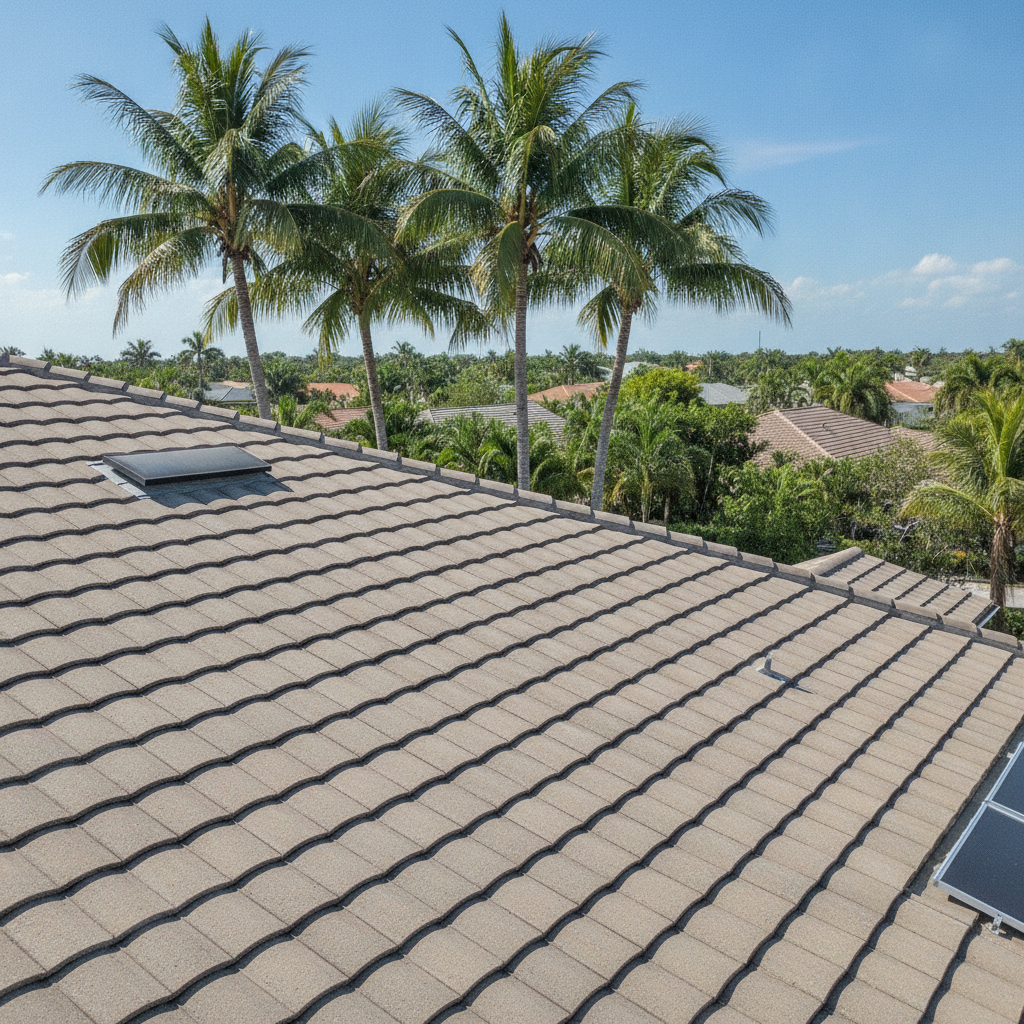
For superior durability and wind resistance, many Vero Beach homeowners opt for standing seam metal roofs or concrete tile roofs. Standing seam metal roofs, with their interlocking panels and robust fastening systems, are exceptionally resistant to high winds, fire, and pests. They boast an impressive lifespan of 30-50 years, often exceeding that in ideal conditions, making them a significant long-term investment. Concrete tile roofs, including barrel and flat profiles, are another excellent choice for Florida. They are incredibly durable, fire-resistant, and offer superior protection against impact and high winds. While heavier and requiring a stronger roof structure, concrete tiles can easily last 30-50 years or even longer, often outliving the home’s original owners when properly installed and maintained.
Understanding these material-specific lifespans and the impact of Florida’s environment is crucial for pre-claim readiness. A professional inspection will not only assess the current condition but also provide an informed estimate of your roof’s remaining useful life, comparing it against typical expectations for your specific material in this challenging climate. This detailed insight allows you to proactively address potential issues, plan for future replacements, and most importantly, present a well-documented case to your insurance provider should the unthinkable happen to your Vero Beach roofing.
What Vero Beach Homeowners Should Do to Prepare
Preparing your Vero Beach home for potential roof damage and subsequent insurance claims requires proactive steps. Don’t wait until a storm is brewing; implement these practical strategies now to protect your investment and streamline any future claim process.
-
Schedule a Professional Pre-Claim Roof Inspection Annually:
WHY: A certified roofer, like Florida Roof Bros, possesses the expertise to identify subtle signs of wear, potential vulnerabilities, and existing damage that an untrained eye might miss. Their detailed report, complete with photos and observations, serves as a timestamped, expert assessment of your roof’s condition before any major event. This documentation is invaluable for proving pre-existing condition vs. new damage in a claim scenario.
HOW: Contact a local, licensed, and insured roofing company that specializes in pre-claim or maintenance inspections. Ensure they provide a written report and high-resolution photographs of all roof areas, including flashing, vents, and valleys.
-
Document Your Roof’s Condition with Your Own Photos and Videos:
WHY: Personal documentation provides supplementary evidence that is difficult for insurance adjusters to dispute. It reinforces the professional inspection report and helps you track changes over time. Date-stamped imagery is key.
HOW: Use a smartphone or digital camera to take clear, high-resolution photos and videos of your entire roof. Capture wide shots showing the overall roof planes, as well as close-ups of specific areas, including shingles, tiles, metal panels, gutters, flashing, and any accessories. Repeat this process annually and after any significant weather event. Store these files securely, ideally in cloud storage.
-
Understand Your Homeowner’s Insurance Policy Inside and Out:
WHY: Many homeowners only review their policy after damage occurs, often discovering critical exclusions, high deductibles, or specific timelines too late. Knowing your coverage, including windstorm deductibles, actual cash value (ACV) vs. replacement cost value (RCV), and claim filing deadlines, is paramount.
HOW: Dedicate time to thoroughly read your policy document. If anything is unclear, schedule a meeting with your insurance agent to review it together. Ask specific questions about roof damage coverage, hurricane deductibles, and what constitutes a covered peril in Florida.
-
Perform Routine Roof Maintenance and Keep Records:
WHY: Regular maintenance prevents minor issues from escalating into major, costly problems. Clearing gutters, trimming overhanging branches, and addressing small repairs promptly can extend your roof’s lifespan and demonstrate to your insurer that you’ve been diligent in its upkeep.
HOW: Annually, or more frequently if your property has many trees, clear gutters and downspouts of debris. Trim tree branches that overhang or are close to your roof to prevent chafing and falling debris during storms. Keep a log of all maintenance activities, including dates, what was done, and any receipts for materials or services.
-
Know Your Roof’s Age and Installation Details:
WHY: The age and specifics of your roof’s installation are critical factors in insurance claims. Older roofs, especially those installed before stricter Florida Building Code updates, may be subject to different depreciation schedules or “25% rule” requirements. Knowing if your roof meets current wind mitigation standards can also affect premiums and claim outcomes.
HOW: Locate your original roof installation permits, inspection reports, and warranty documents. If you don’t have them, check with your county’s building department for permit records. This information helps confirm the roof’s age, materials used, and whether it was installed to code.
-
Secure Your Property Before Any Impending Storm:
WHY: This is a crucial Florida-specific tip. Taking steps to secure your property before a hurricane or severe storm hits can mitigate damage and demonstrates due diligence to your insurer. It helps prevent secondary damage from water intrusion or flying debris.
HOW: Install hurricane shutters or plywood over windows and doors. Secure or bring inside all outdoor furniture, grills, trash cans, and anything that could become a projectile. Trim dead or weak tree branches that could fall onto your roof. Clear storm drains and ensure gutters are free-flowing.
-
Act Immediately and Document Post-Damage:
WHY: Florida insurance policies often have strict timelines for reporting damage. Delaying can jeopardize your claim. Immediate documentation of post-storm damage is crucial for comparison against your pre-claim records.
HOW: As soon as it’s safe, conduct a visual inspection of your roof from the ground. Take extensive photos and videos of any new damage, focusing on specific areas where you suspect issues. Contact your insurance company immediately to report the damage. For critical leaks, make temporary, safe repairs (e.g., tarping) to prevent further interior damage, keeping all receipts for these mitigation efforts.
Frequently Asked Questions
Why is a pre-claim inspection so important for my Vero Beach home?
A pre-claim inspection provides a vital, documented baseline of your roof’s condition before any major weather events. This official record can be invaluable if you ever need to file an insurance claim, helping to distinguish new damage from pre-existing issues and potentially streamlining the claims process with clear evidence.
What types of roof damage are typically covered by homeowners insurance in Florida?
In Florida, standard homeowners insurance policies typically cover sudden and accidental damage caused by perils such as wind, hail, lightning, and fire. However, wear and tear, neglect, or damage that develops gradually are generally excluded. Always review your specific policy to understand your coverage.
How long do common roofing materials like asphalt shingles or metal roofs last in the Florida climate?
The lifespan of roofing materials in Florida can vary due significantly to the intense sun, humidity, and frequent storms. Asphalt shingle roofs typically last 15-25 years, while a quality metal roof can endure for 40-70 years or even longer, offering superior durability against the elements common in Vero Beach.
Will getting a pre-claim inspection affect my current homeowners insurance policy in Florida?
No, a pre-claim inspection is a proactive measure and does not typically affect your current homeowners insurance policy. It serves to inform you, the homeowner, about your roof’s condition and provides documentation for your records, which can be beneficial if you need to file a claim in the future. It is not an insurance claim itself.
What is the typical cost of a comprehensive roof inspection in Vero Beach?
While some companies may charge for a detailed roof assessment, Florida Roof Bros offers 100% free, no-obligation roof inspections for homeowners in Vero Beach and surrounding areas. This allows you to get a professional evaluation of your roof’s condition without any upfront cost, helping you make informed decisions about your home.
Roofing Services Across Central Florida
Florida Roof Bros serves homeowners throughout Brevard County, Pinellas County, and surrounding Central Florida communities. If you need a roof inspection, repair, or replacement in any of these areas, our team is ready to help:
- Palm Bay, FL Roofing
- Melbourne, FL Roofing
- West Melbourne, FL Roofing
- Rockledge, FL Roofing
- Sebastian, FL Roofing
Protecting Your Vero Beach Home Starts Here
Understanding the condition of your roof through a pre-claim inspection is an essential step for any homeowner in Vero Beach. It’s more than just a check-up; it’s a proactive measure that provides peace of mind, crucial documentation, and can significantly streamline any future insurance claims you might need to make in our storm-prone region. Don’t wait for a hurricane or severe weather event to discover potential issues.
Your roof is your home’s first line of defense, and its health directly impacts the safety and value of your property. By getting a professional assessment now, you empower yourself with the knowledge needed to maintain your roof’s integrity and protect your investment. A thorough inspection can identify minor problems before they escalate into costly repairs, saving you time, money, and stress down the line.
Don’t leave the health of your roof to chance. Take the proactive step today to ensure your home is protected. Florida Roof Bros is proud to offer 100% free, no-obligation roof inspections for all Vero Beach homeowners. Our expert team will provide a detailed assessment and honest recommendations, giving you the clarity you need. To schedule your complimentary inspection and secure your home’s future, call us directly at (321) 446-1702. Trust the Pros, Call the Bros for your roofing needs.
Need a free roof inspection? Call Florida Roof Bros at (321) 446-1702 or request a free inspection online. Family-owned, no subcontractors, Owens Corning Platinum Preferred. Trust the Pros, Call the Bros.
