

General Roofing
Roofing
Beat the Florida Heat: Energy-Efficient Roofing Upgrades That Slash Your AC Bills
The relentless Florida sun is a fact of life for us here in Palm Bay and across Brevard County. We all know that feeling: walking into your home after a long day, only to be greeted by a blast of warm air, even with the air conditioning running full tilt. Then comes the monthly utility bill, a stark reminder of just how hard your HVAC system is working to keep your living space comfortable against the intense heat and humidity that defines our climate for much of the year. This constant battle against the elements not only strains your wallet but also puts significant wear and tear on your cooling equipment, potentially shortening its lifespan.
Many homeowners in Central Florida, including those in Pinellas County, often focus on windows, insulation, or even appliances when thinking about energy efficiency. While these are certainly important components of a well-sealed home, one of the most significant yet frequently overlooked factors contributing to soaring energy costs is your roof. Your roof is your home’s first line of defense against the sun’s scorching rays, directly impacting how much heat penetrates your attic and, subsequently, your living areas. A traditional or aging roof can act like a giant heat magnet, absorbing and radiating heat downwards, forcing your AC to work overtime.
This post is designed to help you understand precisely how your roof plays a pivotal role in your home’s energy consumption and comfort, especially here in Florida. We’ll explore the concept of energy-efficient roofing, detailing how modern materials and smart design choices can drastically reduce the heat gain in your home. Our goal is to equip you with the knowledge to make informed decisions about upgrading your roof, transforming it from a heat absorber into a heat reflector, and ultimately, a significant source of savings on your utility bills.
For over 25 years combined, our family at Florida Roof Bros has been helping homeowners in Palm Bay and surrounding areas navigate these challenges. We understand the unique demands of the Florida climate and how crucial a high-performing roof is for both protection and efficiency. With our in-house crews, never relying on subcontractors, we ensure every installation meets the highest standards, backed by our status as an Owens Corning Platinum Preferred Contractor and an A+ rating from the BBB. If you’re ready to discuss how an energy-efficient roof can benefit your home, don’t hesitate to reach out to Florida Roof Bros at (321) 446-1702. Trust the Pros, Call the Bros.
By the time you finish reading, you’ll have a clear picture of the specific roofing technologies and strategies that are most effective for combating Florida’s heat and humidity. We’ll delve into materials, ventilation, and the long-term advantages that extend far beyond just lower energy bills. Making the right choice for your roof is not just an investment in your home’s protection, but a smart move towards a more comfortable and cost-effective living environment for years to come.
The Florida Climate Challenge: Why Your Roof Matters More Than You Think
Living in Florida means embracing sunshine, but it also means confronting intense heat and humidity for most of the year. Our climate, characterized by long, hot summers, mild winters, and frequent afternoon thunderstorms, presents a unique set of challenges for residential structures. Unlike colder climates where roofs primarily deal with snow loads and insulation against heat loss, Florida roofs are constantly battling heat gain, UV radiation, and moisture intrusion. This relentless exposure significantly impacts a home’s interior temperature and, consequently, its energy demands.
The primary culprit in our climate is solar radiation. When the sun beats down on your roof, traditional dark-colored shingles or metal roofs absorb a substantial amount of solar energy. This absorbed heat then transfers through the roofing materials, into your attic space, and eventually radiates down into your living areas. Even with adequate attic insulation, the sheer volume of heat building up in your attic can overwhelm your cooling system, leading to higher indoor temperatures and extended run times for your air conditioner. This is where the concept of energy-efficient roofing truly shines in our state.
Florida’s building codes are increasingly recognizing the importance of energy efficiency, with updates often incorporating requirements for better insulation and ventilation. While these codes set minimum standards, proactive homeowners in Palm Bay, Brevard County, and across Central Florida can go above and beyond these requirements to achieve superior energy performance. Understanding these local regulations is key to ensuring any roofing upgrade not only meets compliance but also maximizes its energy-saving potential, providing benefits that are both immediate and long-lasting.
When considering roofing materials in Florida, it’s not just about aesthetics or durability against hurricanes; it’s fundamentally about thermal performance. Traditional asphalt shingles, while cost-effective, can vary significantly in their ability to reflect solar energy. Newer technologies, however, offer specialized coatings and granular surfaces designed to bounce sunlight away from your home. The upfront cost of these specialized materials might be slightly higher than conventional options, but the long-term savings on utility bills often provide a rapid return on investment, typically within a few years depending on your home’s size and current energy usage.
Beyond the materials themselves, the installation process and proper attic ventilation are critical components of an energy-efficient roofing system. Even the most advanced cool roof shingles will struggle to perform optimally if the attic beneath them is a superheated oven due to poor airflow. Effective ventilation systems, including soffit and ridge vents, work in tandem with reflective roofing to create a cooler attic space, which significantly reduces the heat load on your entire home. This holistic approach to roofing ensures maximum energy savings and enhanced indoor comfort, a true benefit for any Florida resident.
Understanding Energy-Efficient Roofing in Florida’s Climate
Living in Palm Bay, you know Florida’s climate is a beast. The relentless sun, oppressive humidity, and those afternoon thunderstorms put your home’s defenses to the ultimate test. Your roof isn’t just shielding you from rain; it’s your primary barrier against the sun’s radiant heat, which is the biggest culprit behind your sky-high AC bills. An energy-efficient roof isn’t just a trend; it’s a necessity here, designed specifically to reflect solar energy, reduce heat absorption, and keep your attic and living spaces cooler naturally. This proactive approach significantly lessens the workload on your air conditioning system, leading to tangible savings and a more comfortable home.
Materials and Technologies That Make a Difference
When we talk about energy-efficient roofing, we’re looking at specific materials and technologies engineered to combat heat transfer. One of the most impactful innovations is the “cool roof” concept. These roofs are designed with highly reflective surfaces that bounce sunlight away from your home, rather than absorbing it as traditional dark roofs do. The reflectivity is measured by a Solar Reflectance Index (SRI), with higher numbers indicating better performance. For Palm Bay homeowners, choosing materials with a high SRI can make a dramatic difference in attic temperatures, often reducing them by 20-30 degrees Fahrenheit on a hot summer day.
- Solar Reflective Shingles: These aren’t just any shingles; they incorporate special granules that reflect a significant portion of the sun’s infrared and UV rays. Brands like GAF Timberline Cool Series or CertainTeed Landmark Solaris are popular choices in Florida, often exceeding ENERGY STAR requirements. While they might cost 10-20% more upfront than standard architectural shingles, the energy savings typically pay back the difference within a few years, and they offer comparable lifespans of 20-30 years, depending on the specific product and maintenance.
- Metal Roofing: Standing seam metal roofs are inherently energy efficient due to their reflective properties, especially lighter colors. They are also incredibly durable, often lasting 40-70 years, far exceeding the 15-20 year average for asphalt shingles in Florida’s harsh environment. Furthermore, metal roofs are excellent at shedding water and can withstand extreme winds, often rated for Category 4 or 5 hurricanes, meeting or exceeding stringent Florida Building Code requirements for High-Velocity Hurricane Zones (HVHZ) when properly installed.
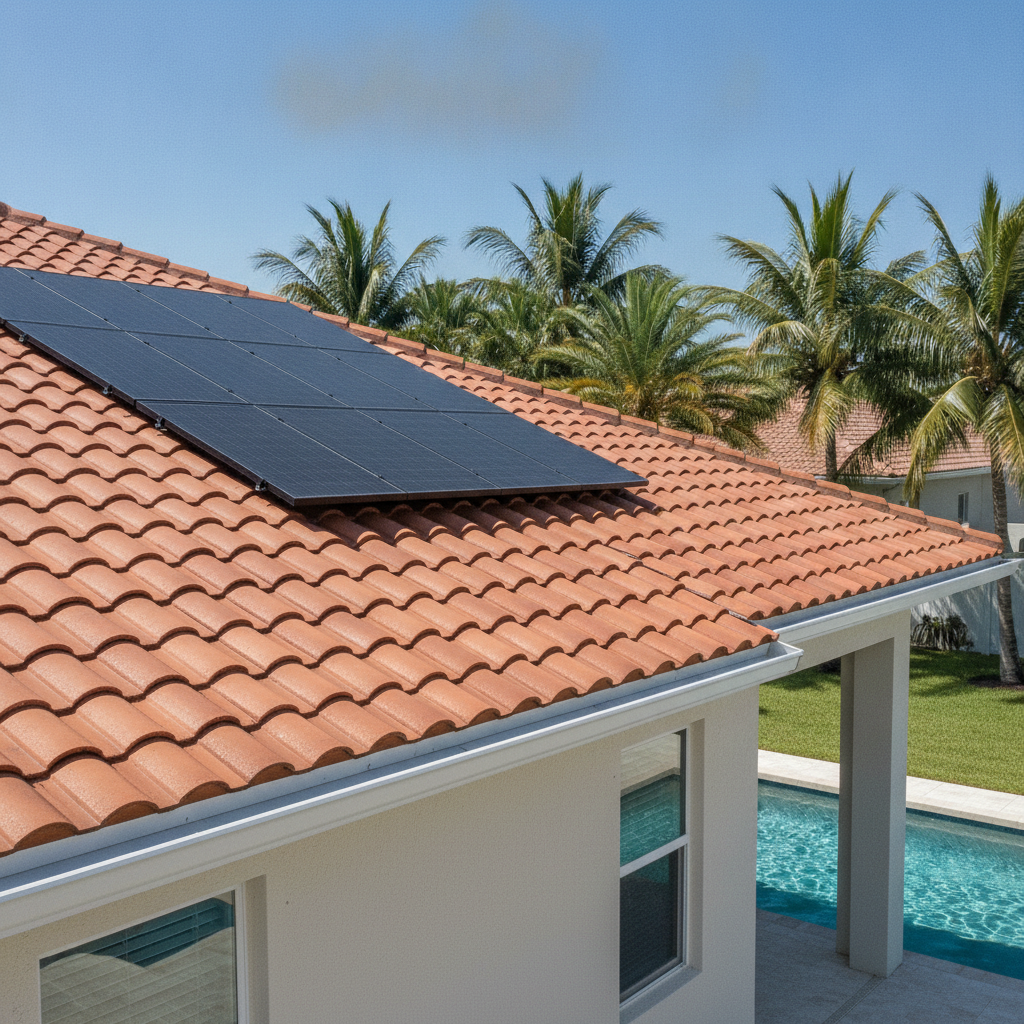
- Concrete and Clay Tiles: These materials offer natural thermal mass and inherent ventilation thanks to their design, which creates an air space between the tile and the roof deck. This air gap acts as an insulating layer, helping to keep heat out. While heavier and more expensive to install, concrete and clay tiles boast impressive lifespans, often 50 years or more, and are extremely resistant to wind, fire, and hail, making them a very robust choice for Florida homes.
The Critical Role of Attic Ventilation
No matter how reflective your roof surface is, proper attic ventilation remains absolutely critical in Florida. Without adequate airflow, heat trapped in your attic can still radiate down into your living spaces, negating some of your roof’s energy-efficient benefits. Effective ventilation systems work by drawing cooler air in through soffit vents at the eaves and expelling hot, moist air through ridge vents or static/powered vents near the peak. This continuous air exchange prevents heat buildup, reduces moisture condensation, and extends the life of your roofing materials and insulation.
Beyond comfort, good attic ventilation is vital for the longevity of your HVAC system. When your attic is excessively hot, your AC unit has to work harder to cool your home, leading to increased wear and tear, more frequent repairs, and a shorter overall lifespan. By keeping your attic cooler, you reduce the strain on your AC, potentially extending its operational life by several years and saving you thousands in replacement costs down the line. It’s a simple, yet profoundly effective, component of a truly energy-efficient home system.
Long-Term Benefits Beyond Savings
While lower utility bills are the most immediate and appealing benefit, investing in energy-efficient roofing offers a cascade of long-term advantages. Your home will simply be more comfortable, with fewer hot spots and a more consistent temperature throughout, reducing the temptation to constantly adjust the thermostat. Beyond comfort, an energy-efficient roof can significantly increase your home’s resale value, as buyers are increasingly prioritizing properties with lower operating costs and modern, durable features. Furthermore, by reducing your energy consumption, you’re also contributing to a smaller carbon footprint, a benefit for the environment as a whole.
Choosing the right energy-efficient roofing solution for your Palm Bay home requires careful consideration of your budget, aesthetic preferences, and specific energy goals. This is where expert guidance becomes invaluable. A reputable local roofer, familiar with the Florida Building Code and the unique challenges of our climate, can help you navigate the options, ensuring you select materials that not only perform well but are also installed correctly. Proper installation is paramount; even the best materials will underperform if not installed by certified professionals who understand the nuances of Florida roofing standards and hurricane preparedness.
Practical Guidance for Florida Homeowners
-
Get a Professional Energy Audit and Roof Inspection
WHY: Before making any significant investment, it’s crucial to understand your current roof’s condition and identify specific areas where energy is being lost. A professional energy audit can pinpoint air leaks, insulation deficiencies, and ventilation issues that contribute to high energy bills. A thorough roof inspection will reveal the structural integrity and remaining lifespan of your existing roof, helping you decide if repairs or a full replacement are more cost-effective.
HOW: Contact a certified energy auditor or a reputable roofing company like Florida Roof Bros for a comprehensive inspection. We’ll assess your roof, attic, and overall home envelope to provide a tailored report and recommendations. This initial step, often costing a few hundred dollars, can save you thousands in misdirected improvements.
-
Prioritize Proper Attic Ventilation
WHY: In Florida’s heat and humidity, a well-ventilated attic is non-negotiable. It prevents heat buildup, reduces moisture accumulation that can lead to mold and rot, and extends the life of your roof and HVAC system. Without proper ventilation, even a brand-new, reflective roof can’t perform at its peak efficiency.
HOW: Ensure your attic has a balanced system of intake vents (like soffit vents) and exhaust vents (like ridge vents or static vents). We often recommend continuous ridge vents combined with adequate soffit ventilation for optimal airflow. If your current system is inadequate, consider upgrades. Installing new vents during a re-roof is the most cost-effective time, typically adding a few hundred to a thousand dollars depending on the type and complexity.
-
Consider Solar Reflective Shingles or Metal Roofing
WHY: These materials directly combat heat gain by reflecting solar radiation away from your home, significantly reducing the amount of heat that enters your attic. This directly translates to lower air conditioning loads and noticeable savings on your monthly utility bills.
HOW: Discuss options like ENERGY STAR-rated solar reflective asphalt shingles or standing seam metal roofing with your roofer. Compare their Solar Reflectance Index (SRI) values, with higher numbers indicating better performance. While these options may have a higher upfront cost (e.g., metal roofing can be 2-3 times the cost of basic shingles, but lasts 2-3 times longer), the long-term energy savings and durability make them excellent investments for Palm Bay homes. For example, a typical 1,800 sq ft roof replacement with solar reflective shingles might cost $14,000-$18,000, while standing seam metal could range from $25,000-$40,000.
-
Install a Radiant Barrier in Your Attic
WHY: A radiant barrier is a highly reflective material, often foil-faced, installed in your attic to block radiant heat transfer from your hot roof deck into your attic space. This is particularly effective in Florida, where radiant heat is a major contributor to attic temperature. It can reduce heat flow through the attic by 50-70%, making your insulation more effective.
HOW: Radiant barriers can be installed on the underside of your roof deck or laid over your existing attic insulation. If you’re getting a new roof, installing a radiant barrier directly onto the roof sheathing is the most efficient method. The cost for adding a radiant barrier typically ranges from $0.50 to $2.00 per square foot, depending on the type and installation method. This is a relatively inexpensive upgrade with a strong return on investment.
-
Understand Florida Building Code and Wind Ratings
WHY: Florida has some of the strictest building codes in the nation, particularly concerning wind resistance and hurricane preparedness. Ensuring your new roof meets or exceeds the current Florida Building Code (FBC) requirements is not just about safety; it’s about protecting your investment and ensuring your home is insurable. Adherence to these codes means your roof is built to withstand hurricane-force winds (e.g., up to 130 mph for Category 3 hurricanes, which are common in our region).
HOW: Always choose a contractor who is licensed, insured, and deeply familiar with the latest FBC standards. Ask about the specific wind uplift ratings of the materials they propose and how they will ensure compliance, including proper nailing patterns and secondary water barriers. This due diligence ensures your roof is not only energy-efficient but also hurricane-ready, which is critical for all Palm Bay homeowners.
-
Regular Maintenance and Post-Hurricane Checks
WHY: Even the most energy-efficient roof needs regular maintenance to perform optimally and extend its lifespan, especially in Florida’s challenging climate. Debris buildup, minor leaks, or damaged components can compromise your roof’s integrity and efficiency. Post-hurricane checks are absolutely vital for identifying hidden damage that could lead to bigger problems and potential insurance claims down the road.
HOW: Schedule an annual roof inspection with Florida Roof Bros, ideally before hurricane season (June 1st). We’ll clear debris, check for wear and tear, inspect flashing, and ensure your ventilation system is clear. After any significant storm, have your roof professionally inspected, even if there’s no visible damage. This proactive approach helps maintain peak performance, prevent costly repairs, and ensures you’re prepared for any necessary insurance claims within typical claim filing deadlines.
Frequently Asked Questions
What is the typical cost range for energy-efficient roofing upgrades in Palm Bay, FL?
Investing in energy-efficient materials like metal roofing, cool shingles, or even a specialized coating can range significantly in cost, typically from $12,000 to $35,000+ for an average Palm Bay home. This range depends on factors such as roof size, pitch, existing roof removal, and the specific high-performance materials chosen. While the upfront investment is higher than basic asphalt, these upgrades often yield substantial long-term savings on energy bills and can increase your home’s value.
How much can a metal roof reduce my AC bill in a hot climate like Palm Bay?
Metal roofs are exceptionally effective at reflecting the sun’s radiant heat away from your home, rather than absorbing it. Homeowners in hot Florida climates like Palm Bay frequently report a noticeable reduction in their monthly AC bills, often seeing savings of 20-30% or more. This efficiency is further amplified when combined with a properly ventilated attic system, creating a more comfortable indoor environment.
What is the lifespan of energy-efficient roofing materials compared to traditional options in Florida’s climate?
Energy-efficient roofing materials are generally designed for superior longevity and durability, especially against harsh Florida weather conditions including intense sun and humidity. For instance, a quality metal roof can last 40-70 years, while cool roof shingles often extend beyond the 20-25 year lifespan of traditional asphalt, resisting UV degradation and heat stress more effectively. These extended lifespans mean fewer replacements and greater long-term value for your Palm Bay home.
Are there any rebates or tax credits available for installing energy-efficient roofing in Palm Bay, FL?
Yes, there are potential financial incentives to consider when upgrading to an energy-efficient roof. Homeowners installing qualifying energy-efficient roofs may be eligible for federal tax credits, such as the Energy Efficient Home Improvement Credit, which can help offset a portion of the installation costs. We always recommend checking with local utility providers in the Palm Bay area and consulting a tax professional to see what specific programs or rebates might apply to your upgrade.
Should I also consider upgrading my attic insulation when getting a new energy-efficient roof?
Absolutely, upgrading your attic insulation is a highly recommended complementary step when installing an energy-efficient roof. A new roof prevents heat from entering, while enhanced insulation acts as a critical barrier, preventing any residual heat from radiating into your living spaces. This combined approach creates a comprehensive thermal envelope, maximizing your energy savings and ensuring optimal indoor comfort year-round in Palm Bay.
Roofing Services Across Central Florida
Florida Roof Bros serves homeowners throughout Brevard County, Pinellas County, and surrounding Central Florida communities. If you need a roof inspection, repair, or replacement in any of these areas, our team is ready to help:
- Melbourne, FL Roofing
- West Melbourne, FL Roofing
- Rockledge, FL Roofing
- Vero Beach, FL Roofing
- Sebastian, FL Roofing
Ready to Slash Your AC Bills?
Battling the relentless Florida heat and sky-high AC bills doesn’t have to be a losing battle. As we’ve explored, investing in energy-efficient roofing solutions is one of the most impactful upgrades you can make for your Palm Bay home. From the reflective power of metal roofs to the innovative technology of cool roof shingles, these options not only drastically reduce heat transfer and lower your cooling costs, but also improve your home’s comfort, durability, and overall market value. It’s a smart, sustainable choice for any homeowner looking to truly beat the heat.
Don’t let another scorching summer drain your wallet and your comfort. If you’re ready to experience the significant benefits of an energy-efficient roof, the first step is a professional assessment of your current system. Florida Roof Bros is proud to offer 100% free, no-obligation roof inspections for homeowners in Palm Bay and the surrounding areas. Our experienced team will evaluate your roof’s condition, discuss the best energy-saving options tailored to your home and budget, and answer all your questions.
Taking control of your energy costs and enhancing your home’s performance is easier than you think. Contact Florida Roof Bros today to schedule your comprehensive free inspection. Our dedicated experts are here to guide you through every step of the process, ensuring you receive a high-quality, energy-efficient roofing solution that will serve your family for decades. When it comes to protecting your home and your wallet from the Florida sun, Trust the Pros, Call the Bros! Reach us directly at (321) 446-1702.
Need a free roof inspection? Call Florida Roof Bros at (321) 446-1702 or request a free inspection online. Family-owned, no subcontractors, Owens Corning Platinum Preferred. Trust the Pros, Call the Bros.
