

General Roofing
Roofing
Florida Homeowners: Comparing Roofing Materials for Hurricane Protection and Longevity
The gentle hum of your air conditioner battling the relentless Florida sun, the sudden downpour that turns streets into rivers in minutes, or the ever-present anxiety as hurricane season approaches , these are familiar rhythms for any homeowner in Palm Bay and across Brevard County. Your home’s roof stands as the primary shield against these formidable elements, absorbing years of intense UV radiation, torrential rains, and the sheer force of tropical storms. Choosing the right roofing material isn’t merely a aesthetic decision; it’s a critical investment in your home’s resilience and your family’s peace of mind.
Making an informed decision about your roof can feel overwhelming, especially with so many options available and the unique demands of our Florida climate. You need a roof that not only looks good but can withstand Category 3 winds, deflect scorching sun, and shed gallons of rainwater without fail. This post aims to demystify the choices, providing you with a clear understanding of various roofing materials and their suitability for hurricane protection and long-term durability in our challenging environment.
We understand the weight of this decision. As a family-owned business with over 25 years of combined experience right here in Central Florida, Florida Roof Bros has seen firsthand how the right material, expertly installed, makes all the difference. Our in-house crews, never subcontractors, are dedicated to ensuring every roof we install meets the highest standards of protection and longevity, backed by our Owens Corning Platinum Preferred Contractor status and an A+ rating from the BBB.
Throughout this guide, we’ll explore the critical factors that influence a roof’s performance in Florida, from material composition to installation techniques. You’ll gain insights into how different options stand up to hurricane-force winds, prolonged sun exposure, and heavy rainfall. By the end, you’ll be better equipped to evaluate materials based on their lifespan, maintenance needs, energy efficiency, and potential insurance benefits, ultimately helping you make the best choice for your home’s future.
The goal is to empower you with knowledge, ensuring your next roofing project is a sound investment that protects your property for decades. Whether you’re in Palm Bay, elsewhere in Brevard County, or across Pinellas County, understanding these differences is key to safeguarding your home. Should you have immediate questions or require expert guidance specific to your property, feel free to reach out to Florida Roof Bros at (321) 446-1702; we’re always here to help.
A durable, well-chosen roof is more than just a cover; it’s an integral part of your home’s structural integrity and overall value, especially in a region prone to extreme weather. Let’s delve into what makes a roof truly Florida-ready, ensuring your investment pays off through every storm and sunny day.
Understanding Florida’s Unique Roofing Challenges
Florida homeowners face a distinct set of environmental challenges that directly impact the lifespan and performance of their roofs. Unlike many other regions, our climate combines intense solar radiation, high humidity, torrential rainfall, and the ever-present threat of hurricane-force winds. These factors collectively create a demanding environment where only the most resilient roofing materials and installation practices will truly stand the test of time.
The sun, while beautiful, is a relentless adversary for roofing materials. Constant exposure to powerful ultraviolet (UV) rays can degrade some materials, leading to fading, cracking, and premature aging. Coupled with high humidity, this can also foster the growth of algae and mold, which not only detract from your home’s curb appeal but can also compromise the integrity of certain roof types over time. Regular heavy downpours test a roof’s ability to shed water efficiently, preventing leaks and moisture intrusion.
Perhaps the most critical consideration for any Florida roof is its ability to withstand hurricane-force winds. The Florida Building Code, particularly since the devastating hurricanes of the early 2000s, has become one of the most stringent in the nation. These codes mandate specific installation techniques and material requirements designed to significantly improve a roof’s resistance to high winds, ensuring that it remains securely attached during severe weather events. Understanding these code requirements is paramount for any new installation or replacement.
When selecting a roofing material, homeowners in Brevard County and beyond must think beyond initial cost and aesthetics. The long-term performance, maintenance requirements, and overall return on investment are heavily influenced by how well a material can cope with our specific climate. For instance, a material that performs admirably in a milder climate might fail prematurely under Florida’s intense sun and storm conditions, leading to costly repairs or early replacement.
Furthermore, your choice of roofing material can have direct implications for your homeowner’s insurance premiums. Insurers often offer discounts for roofs that meet enhanced wind resistance standards or use materials known for their durability against common Florida perils. This financial incentive further underscores the importance of selecting a robust, certified material installed by a licensed, insured, certified, and bonded company like Florida Roof Bros, whose FL license number is CCC1332911.
Navigating these complexities requires informed decisions based on expert knowledge. We’re not just talking about selecting a color; we’re discussing the fundamental protection of your home against nature’s most powerful forces. The following sections will delve into specific roofing materials, analyzing how each stacks up against these unique Florida challenges, helping you protect your investment and secure your peace of mind.
Understanding Florida’s Roofing Material Landscape
Choosing the right roofing material for your Palm Bay home isn’t just about aesthetics; it’s a critical investment in your property’s long-term protection, especially given Florida’s challenging climate. From scorching sun and torrential downpours to the ever-present threat of hurricanes, your roof needs to be a fortress. Let’s break down the most common roofing materials we see across Florida and how they stack up against our unique environmental demands.
Asphalt Shingles: A Common Choice
Asphalt shingles, particularly architectural or dimensional shingles, are a popular choice for many Florida homeowners due to their versatility and affordability. While standard 3-tab shingles are less common now, architectural shingles offer a more robust option with better wind resistance. Most quality architectural shingles installed in Florida are rated for winds up to 130 mph, which is adequate for Category 3 hurricanes, but may be challenged by stronger storms without additional fastening methods.
- Lifespan in Florida: While national averages for architectural shingles are 30-50 years, in Florida’s intense heat and humidity, you can realistically expect 20-30 years before significant granular loss or heat damage necessitates replacement.
- Maintenance: Relatively low, but requires occasional cleaning to prevent mold and mildew growth. Granular loss and curling are common signs of aging in our climate.
- Energy Efficiency: Standard asphalt shingles absorb a lot of heat. Lighter colors or “cool roof” rated shingles can offer some energy benefits, but generally, they are not the most energy-efficient option.
- Cost: Typically the most budget-friendly option, ranging from $4.50 to $7.50 per square foot installed in Palm Bay, depending on shingle quality and roof complexity.
Metal Roofing: The Hurricane Champion
Metal roofing, especially standing seam metal, is gaining significant traction in Florida for its exceptional durability and performance. These systems are designed to withstand hurricane-force winds often exceeding 150 mph, making them suitable for even Category 4 and 5 hurricanes when installed according to the Florida Building Code. Their interlocking panels and robust fastening systems resist uplift and water intrusion like no other.
- Lifespan in Florida: Metal roofs boast an impressive lifespan of 40-70 years, often outlasting the homeowners themselves. This longevity significantly outweighs the initial investment.
- Maintenance: Very low. Metal roofs are resistant to mold, mildew, and rot. Occasional inspection for loose fasteners or minor dents is usually all that’s needed.
- Energy Efficiency: Excellent. Metal roofs reflect solar radiant heat, reducing heat gain in your attic and lowering cooling costs. Many come with “cool roof” ratings, and some even qualify for energy tax credits.
- Cost: Higher initial investment than shingles, typically ranging from $9.00 to $18.00 per square foot for standing seam metal, but offers superior ROI through longevity, energy savings, and potential insurance discounts.
Tile Roofing: Durability and Aesthetics
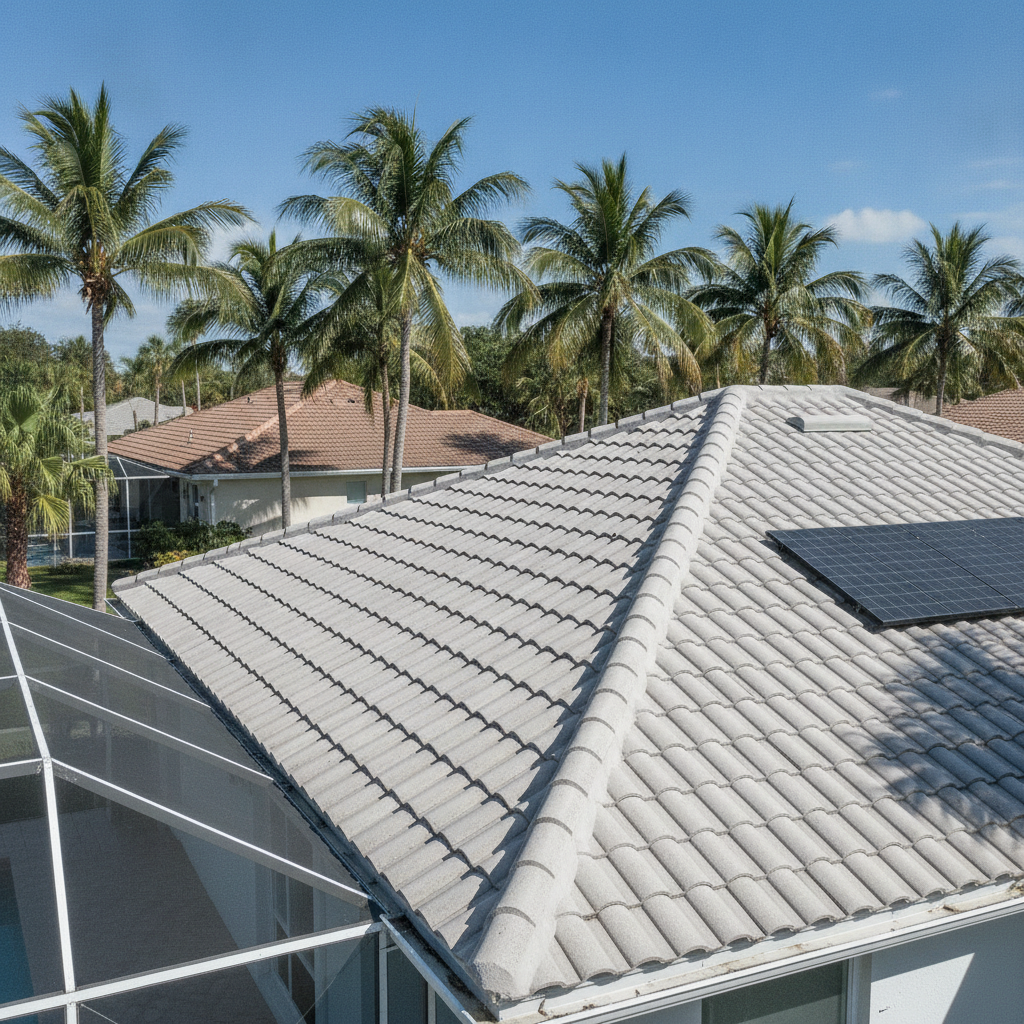
Concrete and clay tiles are iconic across many Florida communities, prized for their Mediterranean aesthetic and incredible resilience. When properly installed with robust fastening systems, tile roofs can easily withstand winds over 150 mph. Their inherent weight and shape allow for natural airflow underneath, making them excellent at dissipating heat.
- Lifespan in Florida: A well-maintained tile roof can last 50 years or more, making it one of the longest-lasting roofing options available. The tiles themselves are extremely durable, though the underlayment may require attention around the 20-30 year mark.
- Maintenance: Moderate. While the tiles are durable, they can be brittle under direct impact, making walking on them difficult. Regular cleaning to prevent algae and moss growth is important.
- Energy Efficiency: Excellent. The airspace created by the tiles and their reflective properties naturally make tile roofs very energy efficient, helping to keep your home cooler.
- Cost: Comparable to or slightly higher than metal, generally ranging from $10.00 to $20.00 per square foot installed, depending on tile type and roof complexity.
Flat Roof Systems: Specialty Solutions
For homes with low-slope or flat roof sections, common in some contemporary designs or additions, TPO (Thermoplastic Polyolefin) and PVC (Polyvinyl Chloride) membranes are the go-to solutions. These single-ply systems are fully adhered or mechanically fastened, creating a seamless, waterproof barrier. Modified Bitumen is another option, often used in multi-ply applications.
- Lifespan in Florida: TPO and PVC typically last 15-30 years in Florida’s climate, with Modified Bitumen offering a similar range. UV resistance is key for longevity.
- Maintenance: Requires careful maintenance to ensure proper drainage and prevent ponding water, which can accelerate wear. Regular inspections for punctures or seam separation are crucial.
- Energy Efficiency: TPO and PVC often come in reflective white, offering excellent “cool roof” properties that significantly reduce heat absorption.
- Cost: Ranges from $6.00 to $12.00 per square foot installed, depending on the system type and roof size.
Beyond Durability: Energy, Maintenance, and Insurance
When selecting a roofing material in Palm Bay, it’s not just about how well it handles a storm. Energy efficiency plays a huge role in your monthly utility bills. Materials like metal and tile, with their reflective properties and ventilation capabilities, can significantly reduce your cooling costs. Maintenance requirements also vary; while asphalt shingles might seem low maintenance initially, they often require more frequent cleaning for mold and mildew than metal or tile.
Furthermore, your choice can directly impact your homeowner’s insurance premiums. The Florida Building Code mandates specific installation standards, and many insurance carriers offer wind mitigation credits for roofs that meet enhanced hurricane protection criteria. Metal and tile roofs, due to their superior wind resistance and longevity, often qualify for substantial discounts. Always consult with your insurance provider to understand potential savings before making your final decision, as a new roof built to current code can often offset its cost over its lifetime through these savings.
What Palm Bay Homeowners Need to Do About Their Roof
Protecting your Palm Bay home starts with a proactive approach to your roof. Given our unique climate and the constant threat of severe weather, regular attention and informed decisions are paramount. Here are actionable steps every homeowner should take to ensure their roof is ready for anything Florida throws its way.
-
Schedule Regular Professional Roof Inspections:
Why: Small issues like loose shingles, cracked tiles, or compromised flashing can quickly escalate into major, costly problems in Florida’s heavy rains and high winds. An annual inspection, and especially one after any significant storm, helps catch these minor defects before they become catastrophic leaks or structural damage. This is particularly vital for detecting hidden moisture issues that lead to mold in our humid environment.
How: Contact Florida Roof Bros for a comprehensive inspection. Our experienced technicians know exactly what to look for, from granular loss on shingles to sealant integrity on flat roofs, and will provide a detailed report and recommendations.
-
Understand Your Roof’s Wind Rating and Building Code Compliance:
Why: Knowing your roof’s wind rating is crucial for hurricane preparedness and understanding your home’s resilience. The Florida Building Code dictates specific requirements for roofing installations, including proper fastening and underlayment, to withstand our unique weather patterns. A roof built to current code offers superior protection and often qualifies for insurance wind mitigation credits.
How: If you have a newer roof, check your installation documentation. For older roofs or if you’re unsure, ask Florida Roof Bros to assess your roof’s current compliance and wind resistance capabilities during an inspection. We can help you understand if your roof meets current standards for your specific area in Palm Bay.
-
Prioritize Proper Attic Ventilation:
Why: Effective attic ventilation is non-negotiable in Florida. It helps dissipate the intense heat that builds up in your attic, extending the life of your roofing materials (especially shingles), reducing your cooling costs, and preventing moisture buildup that can lead to wood rot and mold growth. Poor ventilation can prematurely age your roof from the inside out.
How: Ensure your home has a balanced ventilation system, typically involving continuous soffit vents for intake and ridge vents or adequate exhaust vents for outflow. Avoid blocking any vents with insulation. If you suspect an issue, we can evaluate your attic ventilation during our inspection.
-
Keep Gutters and Downspouts Clear and Functional:
Why: Clogged gutters and downspouts prevent rainwater from properly draining away from your roof and foundation. This can lead to water backing up under your shingles, overflowing onto your fascia boards (causing rot), or pooling around your foundation, potentially leading to structural damage and costly repairs. In Florida’s heavy rain, efficient drainage is paramount.
How: Regularly clean your gutters, especially after heavy storms or periods of high winds that can deposit leaves and debris. Consider installing gutter guards to reduce maintenance. Ensure downspouts direct water at least several feet away from your home’s foundation.
-
Review Your Homeowner’s Insurance Policy and Wind Mitigation Report:
Why: Your insurance policy is your financial safety net. Understanding your coverage limits, deductibles (especially hurricane deductibles), and what constitutes a covered loss is vital. A wind mitigation inspection can identify features that reduce hurricane damage risk, potentially leading to significant premium discounts in Florida.
How: Talk to your insurance agent annually. If you’ve had a new roof installed, ensure a wind mitigation inspection is performed to update your policy and secure any applicable credits. Keep copies of your inspection reports and roofing permits readily accessible.
-
Address Any Roof Damage or Leaks Immediately:
Why: In Florida’s climate, a small leak is never “just a small leak.” It’s an open invitation for water intrusion, wood rot, and rapid mold growth, which can quickly spread throughout your home and become a serious health hazard. Delaying repairs will only lead to more extensive and expensive damage.
How: As soon as you suspect a leak or notice any damage, contact Florida Roof Bros. We offer prompt repair services to prevent minor issues from turning into major catastrophes, protecting your home’s interior and structural integrity.
-
Choose a Local, Reputable Roofing Contractor:
Why: A local roofer like Florida Roof Bros understands the specific challenges of roofing in Palm Bay, including local building codes, preferred materials for our climate, and the nuances of working with Florida insurance companies. We’re part of your community, offering reliable warranties and accessible support long after the job is done.
How: Always check for proper licensing and insurance. Look for contractors with strong local references, positive online reviews, and a proven track record of quality work in your area. Don’t be swayed by out-of-state storm chasers who disappear after the hurricane season.
Frequently Asked Questions
How long can I expect different roofing materials to last in Palm Bay, Florida?
In Palm Bay’s intense sun and frequent storms, asphalt shingles typically last between 15-25 years, depending on their quality and maintenance. Metal roofs, known for their resilience, can easily endure for 40-70 years, often outliving the homeowner. Tile roofs, such as concrete or clay, offer exceptional longevity, frequently exceeding 50 years and sometimes even a century with minimal upkeep.
Which roofing material offers the best hurricane protection for a Florida home?
Metal roofing, particularly standing seam systems, is widely regarded as offering the best hurricane protection due to its superior wind uplift resistance and interlocking panels. These systems are designed to withstand extreme wind speeds, significantly reducing the risk of blow-offs. While tile roofs also perform very well, their hurricane resistance relies heavily on meticulous installation according to stringent Florida Building Code standards, ensuring each tile is securely fastened.
Is a metal roof a good investment for my Palm Bay home?
Yes, a metal roof is generally an excellent long-term investment for Palm Bay homeowners despite its higher initial cost compared to asphalt shingles. Its exceptional durability means fewer repairs and replacements over decades, saving you money in the long run. Furthermore, metal roofs are highly energy-efficient, reflecting solar heat and potentially lowering your cooling bills, and can even qualify for insurance premium discounts, making the overall cost-benefit very favorable.
What are the main differences between asphalt shingles and metal roofs for Florida homeowners?
The primary differences lie in cost, lifespan, and performance against Florida’s elements. Asphalt shingles are more affordable upfront and easier to install, but they have a shorter lifespan (15-25 years) and are more susceptible to wind damage and UV degradation. Metal roofs, while a larger initial investment, offer superior longevity (40-70+ years), unmatched hurricane protection, excellent energy efficiency, and require less maintenance, making them a robust long-term solution.
How often should I have my roof inspected in Palm Bay, especially after storms?
It is strongly recommended to have your roof professionally inspected annually in Palm Bay to identify any minor issues or wear and tear before they escalate into costly repairs. Beyond routine checks, a thorough inspection is absolutely crucial after any significant weather event, particularly after hurricane-force winds, severe thunderstorms, or hail, to detect hidden damage that might compromise your roof’s integrity and void warranties if left unaddressed.
Roofing Services Across Central Florida
Florida Roof Bros serves homeowners throughout Brevard County, Pinellas County, and surrounding Central Florida communities. If you need a roof inspection, repair, or replacement in any of these areas, our team is ready to help:
- Melbourne, FL Roofing
- West Melbourne, FL Roofing
- Rockledge, FL Roofing
- Vero Beach, FL Roofing
- Sebastian, FL Roofing
Secure Your Palm Bay Home with Florida Roof Bros
Choosing the right roofing material for your Palm Bay home is one of the most critical decisions you’ll make for its long-term safety and value. As we’ve explored, each option, from cost-effective asphalt shingles to resilient metal and elegant tile, offers distinct advantages regarding hurricane protection, longevity, and initial investment. Understanding these differences empowers you to select a roofing system that not only safeguards your property against Florida’s challenging weather but also enhances its curb appeal and energy efficiency for decades to come.
When it comes to protecting your most valuable asset, there’s no substitute for expert advice and quality craftsmanship. Florida Roof Bros specializes in providing top-tier roofing solutions tailored to the unique demands of Palm Bay and the greater Florida region. We’re here to help you navigate your options, ensuring you make an informed decision that brings peace of mind and lasting protection.
Don’t wait until the next storm season to assess your roof’s readiness. We offer 100% free, no-obligation roof inspections to help you understand your current roof’s condition and explore the best options for replacement or repair. For reliable service and unparalleled expertise in roofing materials and hurricane preparedness, contact Florida Roof Bros today. Trust the Pros, Call the Bros at (321) 446-1702 to schedule your complimentary inspection and secure your home’s future.
Need a free roof inspection? Call Florida Roof Bros at (321) 446-1702 or request a free inspection online. Family-owned, no subcontractors, Owens Corning Platinum Preferred. Trust the Pros, Call the Bros.
