

General Roofing
Roofing
How Long Does a Roof Last in Florida?
The relentless Florida sun beating down, the sudden torrential downpours, the constant humidity, and the occasional hurricane threat, these are all just part of life here in Satellite Beach. As a homeowner, you understand that your roof isn’t just a pretty top to your house; it is the primary shield protecting your biggest investment from these harsh elements. It is easy to take your roof for granted until a small leak appears, or a neighbor mentions their recent replacement, sparking that familiar thought: “How much longer do I have on my own roof?”
Figuring out the true lifespan of a roof in our unique climate can feel like a complex puzzle, with so many variables influencing its durability and performance. You are likely wondering about the materials, the local weather patterns, and what sort of investment you might be looking at down the line. This post aims to demystify the factors that determine how long your roof will truly last, helping you understand the financial implications and prepare for its eventual replacement.
We will break down the expected longevity of common roofing materials and discuss how the specific challenges of Florida weather accelerate wear and tear. Understanding these details is crucial for making informed decisions about maintenance, repairs, or a full replacement. Ultimately, knowing your roof’s potential lifespan allows for better budgeting and peace of mind, ensuring your home remains secure and protected for years to come.
For homeowners across Brevard County, including those right here in Satellite Beach, understanding your roof’s health and projected lifespan is a critical aspect of homeownership. When it comes to reliable information and expert service, you need a local team that truly understands Florida roofing. That is why so many trust Florida Roof Bros, a family-owned company known for our in-house crews and commitment to quality; you can always reach us directly at (321) 446-1702 for any questions or concerns.
Our goal is to equip you with the knowledge to identify potential issues early and to understand the long-term value of your roofing system. We believe that an informed homeowner is a confident homeowner, ready to tackle any roofing challenge that comes their way. This educational approach ensures you are prepared, whether your roof is brand new, middle-aged, or nearing the end of its service life.
This discussion will lay the groundwork for understanding the full cost breakdown of a roofing system over its entire life cycle. From initial installation expenses to potential maintenance and eventual replacement, every decision impacts your wallet and your home’s structural integrity. By the end, you will have a clearer picture of what to expect and how to maximize your roof’s performance and value.
Understanding Florida’s Unique Roofing Environment and Its Impact on Lifespan
Florida is a beautiful place to live, but its climate presents a particularly harsh environment for roofing materials, significantly affecting their expected lifespan compared to other regions. The intense ultraviolet (UV) radiation from the sun is a constant aggressor, causing materials to break down, fade, and become brittle much faster than in cooler, less sunny climates. This daily bombardment is a primary factor in the premature aging of many roofing systems across Brevard County.
Beyond the sun, the sheer volume of rain and the high humidity levels contribute to accelerated wear. Persistent moisture can lead to algae and mold growth, especially on asphalt shingles, which not only looks unsightly but can also compromise the integrity of the granules. Furthermore, the frequent, heavy downpours test the limits of flashing, seals, and drainage systems, revealing any weaknesses that might otherwise go unnoticed in drier climates. This constant cycle of wet and dry, hot and humid, is a significant challenge for any roof.
Then there is the ever-present threat of tropical storms and hurricanes, which Florida homeowners know all too well. Even if a direct hit is avoided, the sustained high winds and driving rain from distant systems can cause significant damage, loosening shingles, lifting eaves, and creating openings for water intrusion. These events, even minor ones, can drastically shorten a roof’s life, often necessitating repairs or replacements long before the material’s typical lifespan would suggest.
Building codes in Florida are among the strictest in the nation, specifically designed to address these environmental challenges. Post-hurricane Andrew, codes were updated to mandate more robust installation techniques and higher-quality, wind-resistant materials. For instance, roofs installed today must meet stringent wind uplift requirements, often involving enhanced nailing patterns and specialized sealants. These codes, while increasing initial installation costs slightly, are crucial for extending a roof’s durability and protecting homes from our severe weather.
The choice of roofing material plays an immense role in how well a roof withstands these Florida-specific conditions and, consequently, its ultimate lifespan. While a standard three-tab asphalt shingle might last 15-20 years in a moderate climate, its longevity here could be significantly less due to the sun and storms. Architectural shingles, metal roofs, and tile roofs offer varying degrees of resistance to UV, wind, and moisture, each with its own cost-benefit analysis concerning lifespan and maintenance.
Considering the “Cost Breakdown” angle, the initial investment in a higher-quality, more resilient material often translates into long-term savings by extending the roof’s life and reducing the frequency of costly repairs. While an upgraded asphalt shingle or a metal roof might have a higher upfront price, their enhanced durability in the face of Florida’s climate can make them more economical over several decades. Understanding these material differences is fundamental to projecting your roof’s true cost of ownership.
Understanding Your Roof’s Lifespan in Satellite Beach
Here in Florida, your roof isn’t just a hat for your house; it’s the primary shield against relentless sun, torrential rain, and hurricane-force winds. The question of “How long does a roof last?” isn’t simple, especially in a place like Satellite Beach where our unique climate puts every roofing material to the ultimate test. Understanding the factors that dictate your roof’s longevity is crucial for making smart decisions about maintenance and replacement.
Common Roofing Materials and Their Lifespans in Florida
When we talk about roof lifespan in Florida, the material choice is paramount. While manufacturers often provide national average lifespans, Florida’s harsh environment can significantly reduce these figures. We see three main types of roofing dominate the Satellite Beach skyline, each with distinct durability characteristics.
Architectural Shingles: These are the most common roofing choice due to their affordability and versatility. Nationally, architectural shingles might last 20-30 years, but here in Florida, you can typically expect them to perform well for 15-25 years. Intense UV exposure, high humidity, and repeated thermal expansion and contraction take a toll, leading to granule loss and brittleness over time. Proper installation, adhering to the Florida Building Code’s enhanced wind uplift requirements, is critical for them to reach even this reduced lifespan.
Standing Seam Metal Roofs: Known for their exceptional durability and sleek appearance, metal roofs are gaining popularity. A high-quality standing seam metal roof can last anywhere from 30 to 50 years, or even longer, especially when properly maintained. They excel against hurricane-force winds and shed water efficiently, making them a fantastic long-term investment for Satellite Beach homeowners. While the upfront cost is higher, their longevity and energy efficiency often offset this over time.
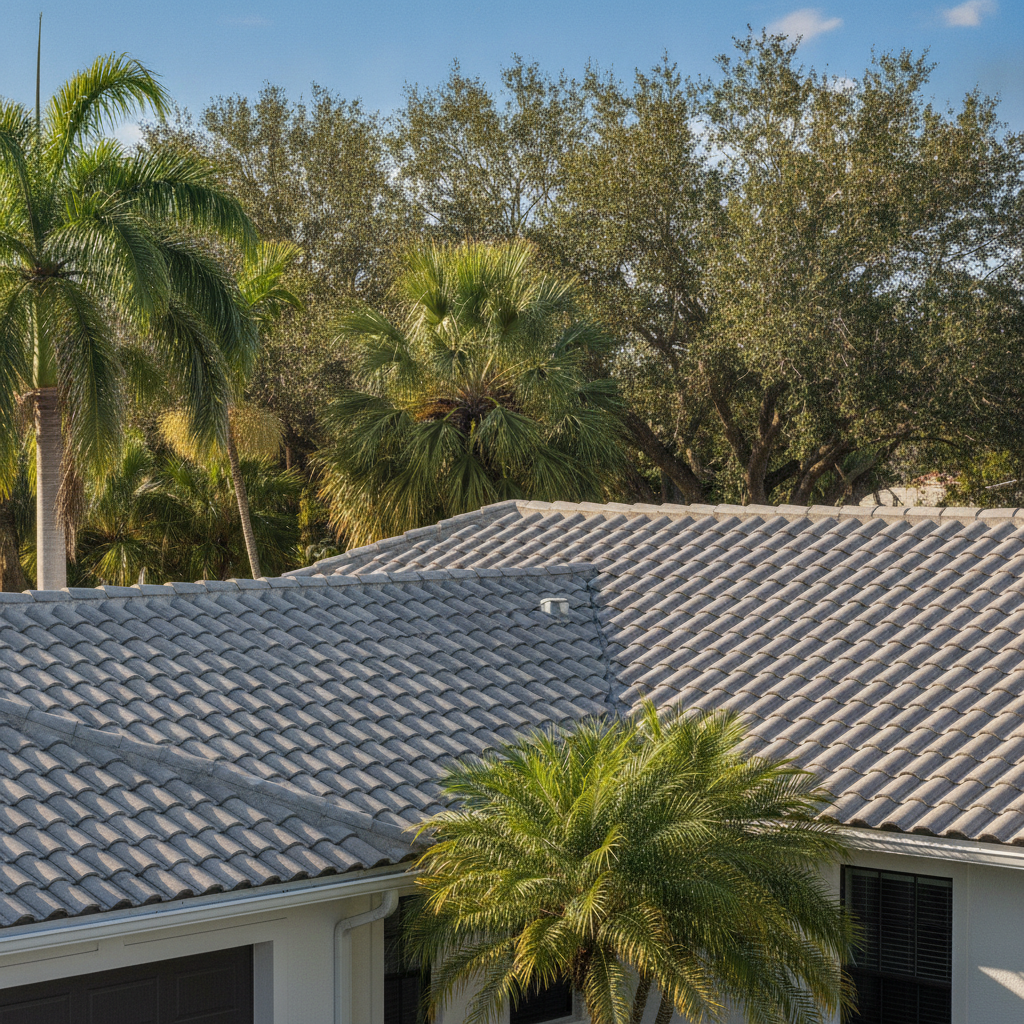
Concrete Tile Roofs: Tile roofs offer superior protection and a distinctive aesthetic. Both concrete and clay tiles are incredibly robust, often lasting 30 to 50 years or more in Florida’s climate. They are highly resistant to fire, insects, and extreme weather, including the strongest hurricanes. Their weight requires a robust roof structure, but for homeowners prioritizing longevity and classic curb appeal, tile is an excellent choice that withstands our local conditions with grace.
- Architectural Shingles: 15-25 years (Florida average)
- Standing Seam Metal: 30-50+ years (Florida average)
- Concrete Tile: 30-50+ years (Florida average)
How Florida’s Climate Challenges Your Roof
Florida’s beautiful weather comes with a significant cost to your roof’s longevity. Understanding these unique challenges helps explain why a roof here might not last as long as its counterpart in a milder climate.
Relentless Sun and Heat: The intense UV radiation and extreme heat experienced daily in Satellite Beach are major culprits. UV rays degrade roofing materials, causing shingles to dry out and crack, and sealants to break down. The constant expansion and contraction from temperature swings stress all components, accelerating wear and tear far beyond national averages.
Wind, Hurricanes, and the Florida Building Code: We live in a High-Velocity Hurricane Zone (HVHZ), meaning our roofs must meet stringent requirements under the Florida Building Code. A roof built to code for a Cat 1 or Cat 2 hurricane might still face immense stress from a Cat 3 or higher storm. Uplift pressure from high winds can tear off even seemingly secure shingles or panels. This is why proper installation, using specific nailing patterns and sealants, is not just recommended but legally required to protect your home.
Heavy Rain and Persistent Humidity: Our rainy seasons bring immense volumes of water, which can find weaknesses in an aging roof system. Constant humidity fosters the growth of moss, algae, and mildew, especially on shingled roofs, which can trap moisture and accelerate material degradation. Poor drainage or clogged gutters can lead to water pooling, increasing the risk of leaks and wood rot in the underlying structure.
Warning Signs: Is Your Roof Nearing the End?
Ignoring the subtle cues your roof provides can lead to costly damage. Being proactive in identifying these warning signs can save you significant money and stress in the long run.
Visible Exterior Damage: Keep an eye out for missing, cracked, or curled shingles. For metal roofs, look for rust spots or loose fasteners. On tile roofs, cracked or dislodged tiles are obvious indicators. Granule loss from asphalt shingles, often seen in gutters, means the protective layer is wearing thin, exposing the asphalt to UV rays.
Interior Indicators: Don’t just look up from the outside. Water stains on ceilings or walls, especially in the attic, are clear signs of a leak. A sagging roof deck, visible from inside the attic, indicates structural damage potentially caused by long-term moisture intrusion. Musty odors can also point to hidden water issues.
- Missing, cracked, or curled shingles/tiles
- Granule loss from asphalt shingles
- Rust on metal panels or fasteners
- Water stains on ceilings or walls
- Sagging roof deck or visible light in the attic
- Persistent moss, algae, or mildew growth
Protecting Your Investment: What Satellite Beach Homeowners Should Do
Your roof is one of the most critical components of your home, especially here in Satellite Beach. Being proactive with its care can significantly extend its roof lifespan in Florida, prevent costly repairs, and provide peace of mind. Here are actionable steps every homeowner should take.
-
Schedule Regular Professional Roof Inspections:
WHY: An annual inspection by a licensed professional can identify minor issues before they escalate into major, expensive problems. Early detection of damaged shingles, loose flashing, or developing leaks can save you thousands. This is particularly important after any significant storm activity.
HOW: Contact Florida Roof Bros at least once a year, or immediately following a named storm or severe weather event. We’ll provide a thorough assessment, addressing any vulnerabilities specific to our Florida climate.
-
Maintain Clean Gutters and Downspouts:
WHY: Clogged gutters prevent proper water drainage, causing water to back up under your shingles, rot fascia boards, and even compromise your home’s foundation. In Florida’s heavy rain, efficient water flow is non-negotiable.
HOW: Regularly clear leaves, twigs, and debris from your gutters, especially before and after hurricane season. Consider installing gutter guards to reduce maintenance frequency.
-
Trim Overhanging Tree Branches:
WHY: Branches rubbing against your roof can abrade shingles and tiles, leading to premature wear. More importantly, during high winds or hurricanes, falling branches are a major cause of severe roof damage. Overhanging branches also create shade, promoting moss and algae growth.
HOW: Hire a professional arborist to trim branches at least 6-10 feet away from your roofline. This reduces impact risk and improves sun exposure, helping to dry out your roof.
-
Address Minor Repairs Promptly:
WHY: A small leak or a couple of missing shingles might seem insignificant, but in Florida’s climate, these can quickly lead to extensive water damage, mold growth, and structural issues. Procrastination is the enemy of a long-lasting roof.
HOW: As soon as you notice any signs of damage, contact Florida Roof Bros. We can perform targeted repairs that prevent further deterioration and extend your roof’s functional life without the immediate need for a full replacement.
-
Understand Your Homeowner’s Insurance Policy (Florida Specific):
WHY: Florida’s insurance landscape is complex, especially regarding wind and hurricane damage. Knowing your deductible, coverage limits, and the claims process *before* a storm hits is vital. Be aware of the state’s two-year window for filing property
Frequently Asked Questions
How long can I expect an asphalt shingle roof to last in Satellite Beach, FL?
In Satellite Beach, asphalt shingle roofs typically last between 15 to 20 years. While manufacturers might rate them for longer, Florida’s intense sun, high humidity, and frequent severe weather events, including hurricanes, significantly accelerate wear and tear. Regular maintenance and professional inspections can help maximize its lifespan, but climate factors are a major determinant for asphalt shingles in our coastal environment.
What are the key signs that my Florida roof needs replacement, not just repairs?
Look for widespread granule loss on shingles, cracked or curled shingles, dark streaks from algae, or water stains on your interior ceilings. Significant sagging in certain areas, multiple missing shingles after a storm, or a roof that is approaching or past its expected lifespan are also strong indicators. If repairs are becoming frequent and costly, a full replacement is often the more economical and safer long-term solution for your home’s protection.
How much does a new metal roof typically cost in Satellite Beach, FL?
The cost of a new metal roof in Satellite Beach can vary significantly based on the type of metal, roof size, pitch, and complexity of the installation. Generally, homeowners can expect to pay anywhere from $15,000 to $40,000 or more for a complete metal roof installation. While the upfront investment is higher than asphalt, metal roofs offer superior longevity, exceptional durability against extreme weather, and enhanced energy efficiency, often lasting 40-70 years.
Is it better to repair or replace an older roof in Florida that has minor leaks?
The decision depends heavily on the age and overall condition of your roof. If your roof is relatively young (under 10 years for shingles) and the leaks are isolated to a small, specific area, targeted repairs can be a cost-effective solution. However, if the roof is older, has multiple leak sources, or shows widespread signs of deterioration and weakness, repairs might only be temporary fixes. In such cases, a full replacement provides better long-term protection, greater peace of mind, and often better insurance rates.
Does homeowner’s insurance cover roof replacement after hurricane damage in Florida?
Generally, homeowner’s insurance policies in Florida do cover roof damage caused by sudden, accidental events like hurricanes, wind, or hail, subject to your deductible and policy limits. However, policies often have specific provisions for windstorm coverage, which might include a separate hurricane deductible that is a percentage of your home’s insured value. It is crucial to review your policy details carefully and contact your insurance provider immediately after any damage to understand your specific coverage and claims process.
Roofing Services Across Central Florida
Florida Roof Bros serves homeowners throughout Brevard County, Pinellas County, and surrounding Central Florida communities. If you need a roof inspection, repair, or replacement in any of these areas, our team is ready to help:
- Palm Bay, FL Roofing
- Melbourne, FL Roofing
- West Melbourne, FL Roofing
- Rockledge, FL Roofing
- Vero Beach, FL Roofing
Secure Your Home with Florida Roof Bros
Understanding how long your roof will last in Florida is vital for every homeowner, especially in a climate like Satellite Beach. While factors like material choice and installation quality play a significant role, the relentless sun, high humidity, and powerful storms unique to our region are constant challenges. Regular vigilance and proactive maintenance are not just recommendations; they are necessities to extend your roof’s life and ensure your home remains protected against the elements.
Don’t wait for a small issue to become a major problem. If you have concerns about your roof’s current condition, its age, or suspect it might be nearing the end of its lifespan, taking action now can save you significant time, stress, and money in the long run. A professional assessment provides clarity and peace of mind, helping you make informed decisions about necessary repairs or a full replacement that suits your home and budget.
At Florida Roof Bros, we are dedicated to providing reliable, honest, and expert roofing services to our Satellite Beach community. We understand the unique demands of Florida’s weather and are here to help you navigate your roofing needs with confidence. Take the first step towards securing your home’s future and discover the Florida Roof Bros difference today. We offer 100% free, no-obligation roof inspections, so you have nothing to lose by getting a professional opinion. When it comes to your roof, Trust the Pros, Call the Bros. Reach out to us directly at (321) 446-1702 to schedule your complimentary inspection.
Need a free roof inspection? Call Florida Roof Bros at (321) 446-1702 or request a free inspection online. Family-owned, no subcontractors, Owens Corning Platinum Preferred. Trust the Pros, Call the Bros.
