

General Roofing
Location-Specific
Roofing
How Long Does a Roof Last in Florida?
The relentless Florida sun beating down, the sudden downpours that turn streets into temporary rivers, and the ever-present hum of hurricane season on the horizon are all familiar experiences for homeowners across our state. Here in Palm Bay, we know firsthand that our roofs endure a constant, unforgiving battle against the elements. It is not just about aesthetics, but about the structural integrity of our homes, the protection of our families, and the peace of mind that comes with a secure overhead shield.
This unique climate naturally leads to a critical question for many Palm Bay residents: exactly how long can a roof realistically last in Florida? Unlike homes in cooler, drier regions, a roof in our subtropical environment faces accelerated wear and tear. Understanding the factors that influence its longevity is essential for making informed decisions about maintenance, repair, and eventual replacement. This post aims to demystify the lifespan of a Florida roof, helping you understand what to expect and how to protect your investment.
At Florida Roof Bros, we are a family-owned company deeply rooted in the Brevard County community, and we understand these local challenges better than anyone. With over 25 years of combined experience specifically in Florida roofing, we’ve seen firsthand how the climate impacts various materials and installations. Our goal is to provide Palm Bay homeowners with clear, honest answers, ensuring you have the knowledge to keep your roof in optimal condition for as long as possible. If you ever have immediate concerns, do not hesitate to call us at (321) 446-1702.
A roof is more than just shingles and decking; it is the primary defense system for your entire home. Ignoring its condition or misunderstanding its expected lifespan can lead to costly repairs, interior damage, and significant stress down the line. By delving into the specifics of Florida’s climate and its impact, along with the types of materials best suited for our environment, we hope to equip you with the insights needed to confidently assess your roof’s health and plan for its future.
For homeowners in Palm Bay and throughout Central Florida, knowing the true resilience of your roof is paramount. It allows you to anticipate major expenses, schedule timely inspections, and ultimately extend the life of your most crucial home component. We are committed to being your trusted resource, providing the expert guidance that only seasoned local professionals can offer.
The Unique Challenge of a Florida Roof: More Than Just Sunshine
While Florida is renowned for its abundant sunshine, this very characteristic, combined with other environmental factors, presents a formidable challenge for any roofing system. Unlike roofs in temperate zones, a Florida roof endures a relentless assault from multiple directions. The intense ultraviolet (UV) radiation from the sun causes materials to break down and degrade faster, leading to cracking, fading, and brittleness. This constant thermal expansion and contraction, as temperatures soar during the day and cool slightly at night, puts immense stress on every component, from shingles to flashing.
Beyond the sun, humidity is another significant adversary. High ambient moisture encourages the growth of algae, moss, and mildew, which not only detract from a roof’s appearance but can also retain moisture, leading to premature deterioration of roofing materials. Then there are the torrential rains, often accompanied by strong winds, which test the watertight integrity of even the newest installations. And, of course, the ever-present threat of hurricane season means roofs must be built to withstand extreme wind uplift pressures, often exceeding 130 miles per hour, a factor that is less critical in many other parts of the country.
Recognizing these severe environmental demands, Florida has some of the most stringent building codes in the nation, particularly in hurricane-prone regions like Brevard County. Following the devastation of Hurricane Andrew in 1992, codes were significantly updated to mandate stronger installation techniques, improved fastening schedules, and more resilient materials. This means that a roof installed today, adhering to Florida Building Code requirements, is inherently designed to be more durable and resistant to extreme weather than older roofs or those built to less demanding standards in other states. Adherence to these codes is non-negotiable for longevity and safety.
The choice of roofing material plays a critical role in how long a roof will last under these conditions. While traditional asphalt shingles remain popular, their lifespan can vary greatly depending on their quality and type. Metal roofs, known for their exceptional durability and energy efficiency, offer a longer lifespan, as do concrete or clay tile roofs, which are highly resistant to heat, moisture, and even hail. Understanding the pros and cons of each material in the context of Florida’s climate is essential for homeowners looking to maximize their roof’s lifespan and overall value.
Proper installation, utilizing in-house crews who understand Florida-specific challenges, is just as crucial as the material itself. As a family-owned company, Florida Roof Bros takes pride in employing only our own highly trained teams, never relying on subcontractors. This commitment ensures consistent quality and adherence to best practices, backed by our 25+ years of combined experience. Our status as an Owens Corning Platinum Preferred Contractor further guarantees that we use top-tier materials and follow manufacturer-specific installation guidelines, which is vital for warranty validity and long-term performance.
Furthermore, being a licensed, insured, certified, and bonded roofing contractor (FL license CCC1332911) means we operate with the highest level of professionalism and accountability. This protection extends to our clients, ensuring that every project, from minor repairs to full replacements, meets rigorous industry standards and local building codes. This foundational knowledge of Florida’s unique roofing environment and the commitment to quality craftsmanship sets the stage for understanding how to truly maximize your roof’s lifespan in our challenging yet beautiful state.
Understanding Your Roof’s Lifespan in Palm Bay
For homeowners in Palm Bay, understanding how long your roof will truly last is crucial, not just for budgeting, but for protecting your most valuable asset. While national averages for roof lifespans exist, Florida’s unique climate and stringent building codes significantly influence these numbers. Here at Florida Roof Bros, we see firsthand how the relentless sun, torrential rains, and hurricane-force winds impact roofing materials, often shortening their effective lifespan compared to cooler, drier regions.
Typical Roof Lifespans by Material in Florida
The material of your roof is the primary factor in its longevity. In Palm Bay, you’ll commonly find several types of roofing, each with its own expected lifespan under Florida conditions. It’s important to note that these are averages; proper installation and consistent maintenance can help you reach the higher end of these estimates.
- Architectural Shingles: These are the most popular choice for residential homes in Palm Bay due to their affordability and aesthetic appeal. While nationally they might last 20-30 years, in Florida’s intense heat and humidity, you can typically expect 15-25 years. The Florida Building Code (FBC) mandates specific wind resistance, often requiring shingles rated for 130 mph or higher in our region.
- Standing Seam Metal Roofing: A premium option known for its durability and energy efficiency, metal roofs are an excellent choice for Florida. They can last anywhere from 40 to 70+ years. Their superior wind resistance makes them highly resilient to hurricanes, often enduring conditions that would severely damage other materials.
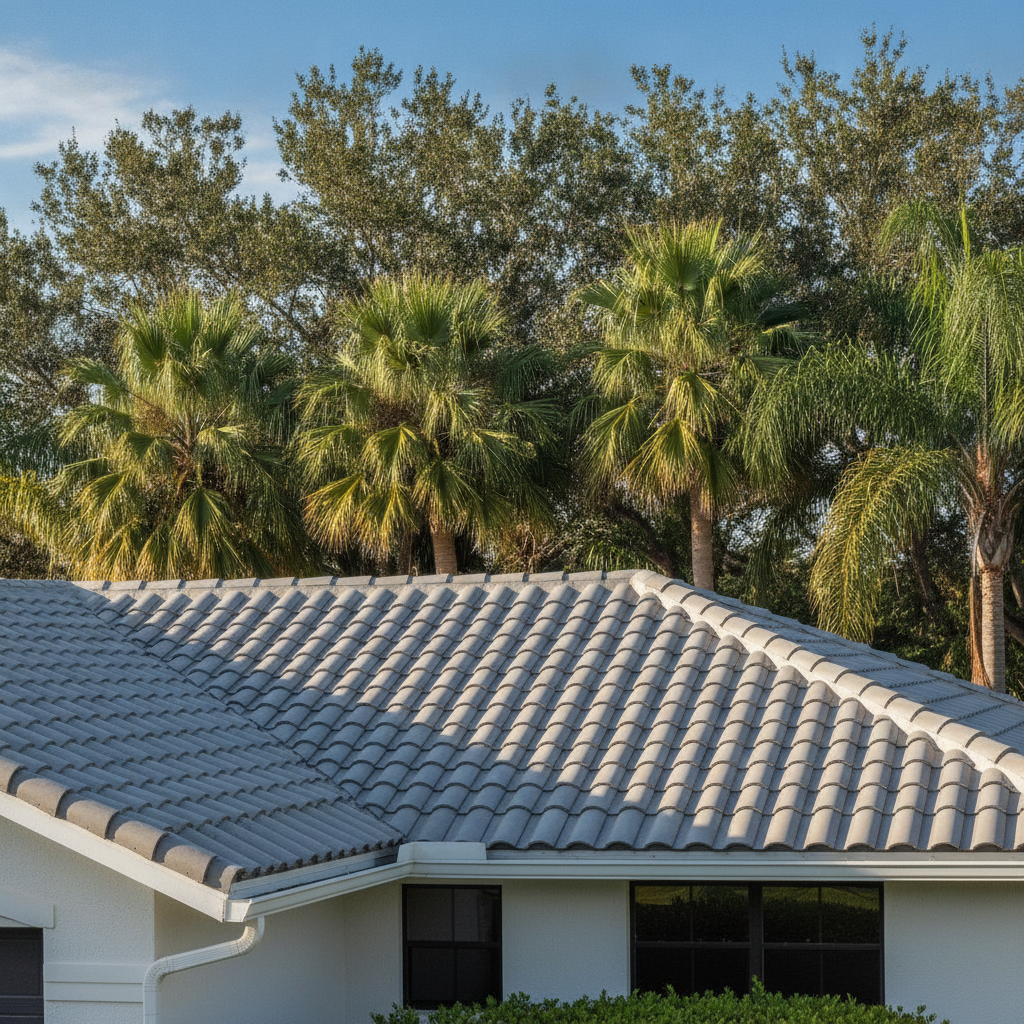
- Concrete and Clay Tile: Known for their beauty and extreme durability, tile roofs are a common sight on many upscale Palm Bay homes. They excel at resisting heat, UV rays, and strong winds. With proper underlayment, concrete and clay tiles can last 30-50 years, often longer, making them a significant long-term investment.
- Flat Roofs (TPO, Modified Bitumen): Often found on commercial buildings or residential homes with low-slope sections, these systems typically have a lifespan of 15-25 years in Florida. Their performance is highly dependent on proper installation and consistent inspection for ponding water, which can accelerate degradation.
How Florida’s Climate Challenges Your Roof
Florida’s beautiful weather comes with significant challenges for your roof. Unlike other parts of the country, our roofs face a unique combination of environmental stressors that accelerate wear and tear.
- Intense UV Radiation and Heat: The constant, powerful Florida sun bakes roofing materials daily. UV rays break down asphalt shingles, causing granules to shed and the material to become brittle. High temperatures lead to continuous expansion and contraction, stressing fasteners and seams, especially on metal roofs and around flashing.
- High Humidity and Torrential Rains: Our humid climate and frequent heavy downpours create ideal conditions for mold, mildew, and algae growth, particularly on asphalt shingles. This organic growth not only looks unsightly but can trap moisture, leading to premature deterioration and granule loss. Persistent rain also tests your roof’s waterproofing, quickly exposing any vulnerabilities in flashing or seals.
- Hurricane-Force Winds and Tropical Storms: Palm Bay is no stranger to tropical weather systems. Even a Category 1 hurricane, with sustained winds of 74-95 mph, can lift and tear away shingles, damage metal panels, and compromise tile systems. The Florida Building Code is designed to mitigate this risk, but every major storm significantly stresses the entire roofing system, potentially shortening its lifespan even if no immediate damage is visible.
- Salt Air Exposure: While Palm Bay is slightly inland, the proximity to the coast means some exposure to salt-laden air. This can accelerate corrosion on metal components like fasteners, flashing, and even certain types of metal roofing, requiring more vigilant maintenance.
Warning Signs Your Roof is Nearing Its End
Being proactive about roof maintenance means knowing what to look for. Recognizing the early warning signs of an aging roof can prevent minor issues from becoming costly emergencies. For asphalt shingle roofs, granule loss is a key indicator. You might see “bald” spots where the protective granules have worn away, or notice granules accumulating in your gutters. Curling or cupping shingles, where the edges either turn up or down, signal that the shingles are drying out and losing their integrity.
Cracked shingles are another clear sign of deterioration, often leading to water intrusion. For tile roofs, look for cracked, broken, or slipped tiles. These can create direct pathways for water to reach your underlayment, which is the true waterproofing barrier beneath the tiles. On metal roofs, rust spots, loose fasteners, or significant fading of the protective coating indicate that the material is losing its battle against the elements.
Regardless of material, any signs of water stains on your interior ceilings or walls, especially after rain, are urgent red flags indicating a leak. Sagging sections of your roof deck, particularly between rafters, suggest structural issues that require immediate professional assessment. Finally, excessive moss or algae growth, while often treatable, can also be a sign that moisture is sitting on your roof too long, accelerating its decay.
What Palm Bay Homeowners Should Do to Extend Their Roof’s Life
Maintaining your roof’s health in Palm Bay is not just about reacting to problems, but proactively preventing them. With Florida’s challenging climate, a little foresight and consistent effort can significantly extend your roof’s lifespan and save you considerable money in the long run. Here are actionable steps every Palm Bay homeowner should take.
-
Schedule Regular Professional Inspections
WHY: Catching minor issues before they escalate is the single most effective way to extend your roof’s life. A professional roofer can identify subtle damage from storms, wear and tear, or manufacturing defects that are invisible from the ground. This is especially critical after hurricane season or any significant weather event in Palm Bay.
HOW: Aim for an annual inspection, ideally in late fall or early winter after the hurricane season has passed. If a named storm impacts our area, even if you don’t see obvious damage, a post-storm inspection is highly recommended to assess for wind uplift or impact damage.
-
Maintain Clear Gutters and Downspouts
WHY: Clogged gutters cause water to back up onto your roof, leading to ponding, fascia rot, and premature degradation of your roof’s edge and underlying decking. Proper drainage is essential to prevent water intrusion and maintain the integrity of your entire roofing system.
HOW: Clean your gutters at least twice a year, typically in spring and fall. Ensure downspouts are clear and directing water well away from your home’s foundation. Consider gutter guards if falling debris is a persistent problem.
-
Trim Overhanging Trees
WHY: Tree branches scraping against your roof can abrade shingles and tiles, leading to granule loss and surface damage. More critically, during tropical storms or hurricanes, weak or overgrown branches can fall onto your roof, causing severe structural damage and punctures. Debris accumulation from trees also traps moisture, fostering algae and moss growth.
HOW: Keep all tree branches trimmed at least 6-10 feet away from your roof surface. Pay particular attention to large, heavy limbs that could pose a threat during high winds. This is a crucial hurricane preparedness step for Palm Bay residents.
-
Address Algae, Moss, and Mold Promptly
WHY: Florida’s humidity provides a perfect breeding ground for organic growth. Algae, moss, and mold not only look unsightly but can degrade roofing materials, particularly asphalt shingles. They trap moisture against the roof surface, accelerating deterioration and potentially voiding manufacturer warranties.
HOW: Never pressure wash your roof, as this can strip granules and damage surfaces. Instead, use a gentle, roof-safe cleaning solution (often a bleach and water mixture, applied with a sprayer) or consider installing zinc or copper strips near the ridge to inhibit growth over time.
-
Understand Your Warranty and Homeowner’s Insurance Policy
WHY: Knowing the specifics of your roof’s warranty and your insurance coverage is vital for financial protection. Warranties outline what manufacturing defects are covered, while your insurance policy dictates what types of storm damage are covered, your deductible, and timelines for filing claims.
HOW: Review your roof’s warranty documents and your homeowner’s insurance policy annually. Understand your hurricane deductible, which is often a percentage of your home’s insured value in Florida. Be aware of the deadlines for filing insurance claims after a storm, as these can vary. Consider a wind mitigation inspection to potentially lower your insurance premiums.
-
Perform Small Repairs Immediately
WHY: In Florida’s climate, a small leak or a few missing shingles can quickly escalate into major structural damage, mold growth, and costly repairs if left unaddressed. Water intrusion is the enemy of your home’s interior and structure.
HOW: Don’t delay. If you notice a cracked tile, a loose piece of flashing, or a few missing shingles, contact Florida Roof Bros right away. Prompt repair can prevent extensive damage and extend the life of your entire roof system.
Frequently Asked Questions
How long does a shingle roof typically last in Palm Bay, FL?
Asphalt shingle roofs in Palm Bay, FL, generally last between 15 to 25 years, though this can vary significantly. Factors like the quality of the shingles, the expertise of the installation, and consistent maintenance play a huge role. Intense Florida sun and frequent heavy rains can also accelerate wear and tear.
What specific weather conditions shorten a roof’s lifespan in Florida?
Florida’s intense UV radiation is a major culprit, breaking down shingle granules and causing materials to become brittle. Frequent torrential rains and high humidity contribute to moisture damage and potential mold growth. Furthermore, high winds from tropical storms and hurricanes can loosen or tear off shingles, significantly shortening a roof’s effective life.
Are metal roofs a better long-term investment for durability in Palm Bay’s climate?
Yes, metal roofs are renowned for their exceptional durability and longevity in Florida’s challenging climate, often lasting 40 to 70 years or even longer. They are highly resistant to wind, fire, and pests, offering superior protection against the elements. Their reflective properties also help reduce cooling costs, making them a smart long-term investment.
How often should I have my roof inspected in Palm Bay, FL, to maximize its life?
We highly recommend a professional roof inspection at least once every one to two years for homes in Palm Bay. It’s especially crucial after hurricane season or any significant storm event, even if no visible damage is apparent. Regular inspections can identify minor issues like loose shingles or seal failures before they escalate into costly repairs, ultimately extending your roof’s overall lifespan.
Does proper attic ventilation impact my roof’s longevity in Florida?
Absolutely, proper attic ventilation is crucial for maximizing roof longevity in Florida’s hot and humid environment. Good ventilation prevents excessive heat and moisture buildup in the attic space. Without it, heat can bake the underside of your roof deck, degrading shingles from below, while moisture can lead to wood rot and mold growth.
What are common signs that my Palm Bay roof needs repair or replacement?
Keep an eye out for missing, cracked, or curled shingles, especially after strong winds or heavy rain. Granule loss, often visible in your gutters, is another key indicator of an aging asphalt roof. Water stains on your ceiling or walls are definitive signs of a leak and require immediate attention.
Roofing Services Across Central Florida
Florida Roof Bros serves homeowners throughout Brevard County, Pinellas County, and surrounding Central Florida communities. If you need a roof inspection, repair, or replacement in any of these areas, our team is ready to help:
- Melbourne, FL Roofing
- West Melbourne, FL Roofing
- Rockledge, FL Roofing
- Vero Beach, FL Roofing
- Sebastian, FL Roofing
Ready to Secure Your Home’s Future?
Understanding how long your roof will last in Palm Bay, FL, is essential for proactive home maintenance. While various roofing materials offer different lifespans, from 15 years for asphalt shingles to 50+ years for metal, the key takeaway is that Florida’s unique climate demands vigilance. Regular maintenance and timely inspections are not just recommendations; they are necessities to maximize your roof’s durability against sun, rain, and wind.
Don’t wait for a small issue to become a major headache. If you’re concerned about your roof’s current condition, its age, or simply want peace of mind, Florida Roof Bros is here to help. We offer 100% free, no-obligation roof inspections, providing you with an honest assessment and expert recommendations tailored to your Palm Bay home’s specific needs. Our experienced team understands the challenges Florida roofs face and is dedicated to ensuring your home remains safe and dry.
Take the first step towards a more secure and worry-free home. Contact Florida Roof Bros today to schedule your free inspection. We’re ready to answer all your questions and provide the quality service you deserve. Trust the Pros, Call the Bros at (321) 446-1702.
Need a free roof inspection? Call Florida Roof Bros at (321) 446-1702 or request a free inspection online. Family-owned, no subcontractors, Owens Corning Platinum Preferred. Trust the Pros, Call the Bros.
