

General Roofing
Roofing
Storm Damage
Kissimmee Homeowners: Your Post-Storm Roof Inspection Checklist for Hurricane Season
After the winds have died down and the rain has stopped lashing against your windows, a familiar calm often settles over Kissimmee neighborhoods. Yet, for many homeowners, this calm is quickly replaced by a quiet anxiety, a gnawing worry about what the recent storm might have left behind on their roof. That critical moment, right after a hurricane or severe weather event, is when your roof needs your attention most. Ignoring potential damage, even minor-looking issues, can quickly escalate into much larger, more costly problems down the line, especially in a region prone to intense weather like Central Florida. The integrity of your roof is paramount to your home’s overall health, acting as the primary shield against our unpredictable climate.
Understanding what to look for and, more importantly, when to call in a professional for a Kissimmee post-storm roof inspection is not just about repairs, it’s about protecting your biggest investment and ensuring the safety of your family. This comprehensive guide will walk you through the immediate steps and crucial considerations for inspecting your roof after a storm, helping you make informed decisions about your property
The Critical Need for Immediate Post-Storm Roof Inspections in Kissimmee
Even a seemingly minor storm can wreak havoc on a Kissimmee roof, causing damage that isn’t immediately visible from the ground. Florida’s unique climate, characterized by intense sun, high humidity, and frequent severe weather, means that small issues can escalate rapidly into major problems. A lifted shingle, for instance, might not cause an immediate leak, but prolonged exposure to our relentless sun and subsequent rain events can quickly lead to water intrusion, wood rot, and even dangerous mold growth in your attic. Delaying a professional inspection can not only compromise your home’s structural integrity but also complicate potential insurance claims, as insurers often require prompt reporting of damage to prevent further, avoidable deterioration. Ensuring your roof still meets the robust standards of the Florida Building Code post-storm is not just about safety; it’s about protecting your investment and maintaining your home’s value.
After any significant weather event, it is imperative for Kissimmee homeowners to know what to look for, even if only from a safe vantage point. Wind damage often manifests as missing, creased, or torn asphalt shingles, particularly along ridge lines and eaves, or bent and lifted panels on metal roofs. Concrete or clay tiles might appear cracked, dislodged, or shattered. Water damage, on the other hand, can be more insidious, showing up as subtle stains on interior ceilings or walls, damp spots in your attic, or a persistent musty odor that indicates hidden moisture. Exterior signs like excessive shingle granules in your gutters or downspouts, displaced flashing around chimneys and vents, or even clogged gutters that lead to fascia and soffit damage, are all red flags that warrant immediate professional attention.
Unpacking Wind and Water Damage
Understanding the specific types of damage helps in identifying potential issues:
- Wind Damage:
- Missing or “creased” asphalt shingles, especially common with older architectural shingles.
- Lifted, bent, or detached metal roofing panels, often around edges or penetrations.
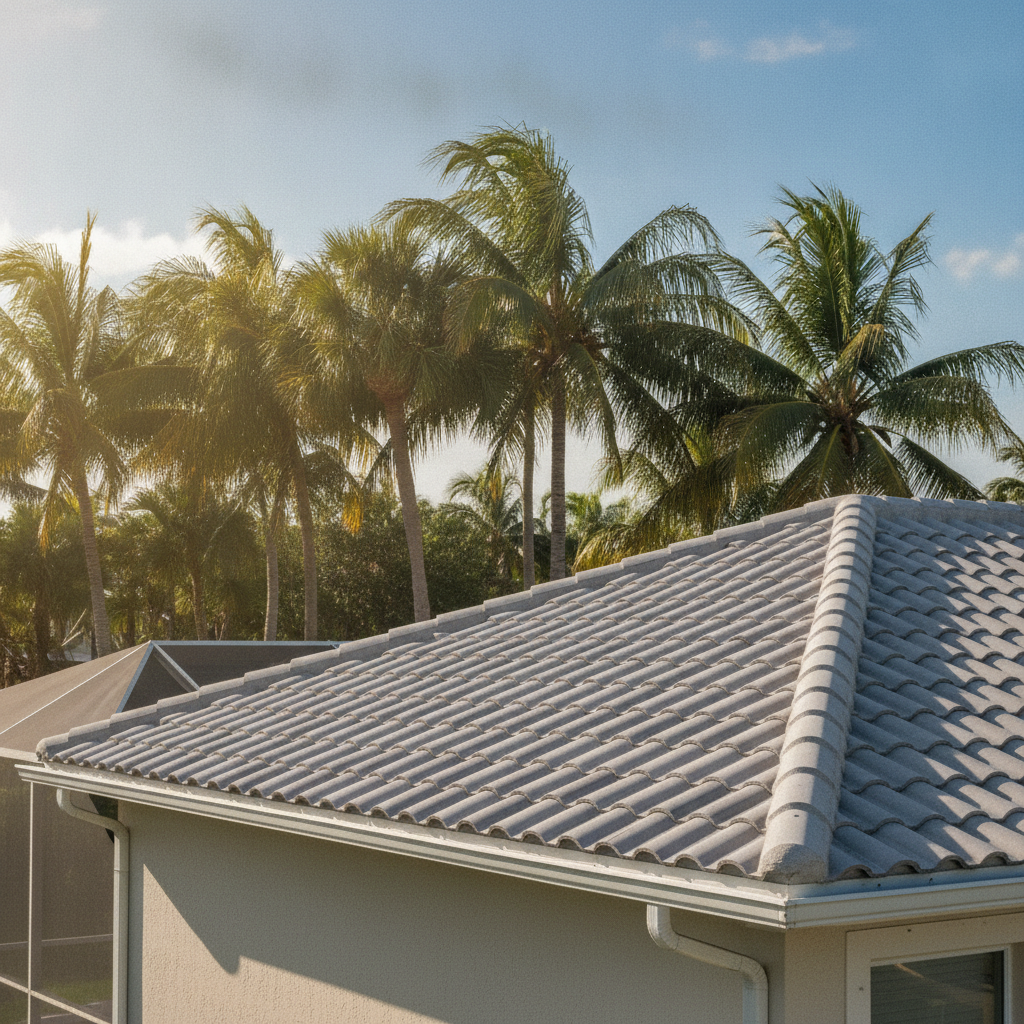
- Cracked, broken, or dislodged concrete or clay tiles, which can be difficult to spot from the ground.
- Damaged or separated flashing around chimneys, skylights, and vent pipes, creating easy entry points for water.
- Impact marks or punctures from airborne debris, which can compromise the roof’s protective layers.
- Water Damage:
- Water stains, discoloration, or peeling paint on interior ceilings and walls, often appearing as rings or streaks.
- Dampness, mildew, or visible mold growth in the attic space, which can indicate a slow, persistent leak.
- Sagging ceiling sections, which suggest significant water accumulation and potential structural compromise.
- Musty or earthy odors inside the home, a telltale sign of hidden moisture and mold.
- Clogged or overflowing gutters, which can cause water to back up under shingles or rot fascia and soffit boards, especially prevalent in Florida’s heavy rainfalls.
Thorough documentation is your strongest ally when navigating the complex world of insurance claims in Florida. Our state’s insurance market is notoriously challenging, making meticulous records of your roof’s condition before and after a storm absolutely essential. This includes date-stamped photos and videos of any damage, detailed notes of communications with your insurer, and comprehensive reports from a professional roofer. Understanding your policy’s specific hurricane deductible, which can range from 2% to 10% of your dwelling coverage, and adhering to strict reporting timelines, often within one to two years of the date of loss, is critical. Kissimmee, like much of Central Florida, lies squarely in a high-risk zone for hurricanes, experiencing impacts from tropical storms to Category 2 or 3 systems. Proactive documentation and swift action are key to mitigating future climate risks and ensuring your home remains insurable and protected.
The lifespan and performance of roofing materials in Kissimmee differ significantly from national averages due to Florida’s harsh environment. While architectural asphalt shingles might carry a 25-30 year manufacturer warranty, the intense UV exposure, high humidity, and frequent thermal cycling can reduce their effective lifespan to 15-20 years here. Standing seam metal roofing, a popular choice for its durability and energy efficiency, often boasts a 30-50+ year lifespan and superior wind resistance, frequently rated for winds exceeding 130-180 mph. Concrete and clay tiles, known for their longevity (30-50+ years) and excellent impact resistance, are also common, though individual tiles can crack from impact or shifting. The Florida Building Code (FBC) dictates specific installation practices, including enhanced fastening schedules and the mandatory use of a secondary water barrier, all designed to bolster a roof’s resilience against our hurricane-force winds and torrential rains, ensuring your home meets the highest safety standards.
At Florida Roof Bros, we pride ourselves on providing expert, non-fearmongering roof inspections for Kissimmee residents. We understand the specific challenges local homeowners face, from navigating the Florida Building Code requirements to dealing with insurance complexities. Our approach is to deliver an honest, unbiased assessment of your roof’s condition, backed by detailed photographic evidence and clear, easy-to-understand reports. We don’t just point out problems; we explain the severity of any damage, discuss your repair or replacement options transparently, and outline the logical next steps. Our goal is to empower you with objective information, helping you make the best decisions for your home without pressure, and ensuring you have the solid documentation needed should an insurance claim be necessary.
Actionable Steps for Kissimmee Homeowners After a Storm
-
Prioritize Safety and Conduct a Preliminary Ground-Level Check:
WHY: Your personal safety is paramount. Never attempt to climb onto a wet or potentially damaged roof yourself, as this can be extremely dangerous. A professional inspector has the training and equipment to do this safely.
HOW: From the ground, walk a full perimeter around your home. Look for obvious signs of damage such as missing shingles, displaced tiles, bent metal panels, or large tree limbs on the roof. Check your gutters for an accumulation of shingle granules, which indicates wear and tear or impact damage. Note any visible water stains on interior ceilings or walls. Take clear, date-stamped photos of anything suspicious you observe from a safe distance.
-
Contact a Reputable Local Roofing Professional IMMEDIATELY:
WHY: Storm damage can be subtle and hidden, often not visible from the ground. A professional roof inspection identifies these issues early, preventing them from escalating into more costly problems like structural rot or extensive mold. Prompt action is also crucial for meeting insurance claim timelines.
HOW: Call Florida Roof Bros right away. As a local Kissimmee company, we are intimately familiar with Florida Building Code requirements and the types of storm damage common in our area. We offer comprehensive, no-obligation inspections. Be wary of out-of-state “storm chasers” who appear after a hurricane; they often lack local licenses, may not understand Florida-specific building codes, and can pressure you into hasty decisions or substandard work.
-
Document Everything Extensively (Before and After the Storm):
WHY: Thorough documentation is your most powerful tool for any potential insurance claim. It provides undeniable evidence of the damage and its direct correlation to the storm event.
HOW: Ideally, you should have pre-storm photos or videos of your roof’s condition. After a storm, meticulously photograph and video all observed damage, both exterior and interior. Capture wide shots showing the context of the damage, as well as close-ups of specific issues. Include photos of any fallen debris, water stains, or interior leaks. Keep a detailed log of dates, times, and names of anyone you speak with regarding the damage or claim.
-
Understand Your Insurance Policy’s Hurricane Deductible and Timelines:
WHY: Florida homeowner policies typically include a separate “hurricane deductible,” which is often a percentage (e.g., 2% to 10%) of your dwelling coverage, not a flat dollar amount. You also have a limited window to report storm damage to your insurer.
HOW: Carefully review your policy documents to understand your specific hurricane deductible and the exact timeframe for reporting storm-related damage. While the statutory limit for reporting hurricane claims in Florida is generally one year from the date of loss, it’s always best to report as soon as possible. Your professional roofer can provide the detailed inspection report and cost estimates necessary to support your claim.
-
Prevent Secondary Damage While Awaiting Repairs (Florida-Specific):
WHY: Kissimmee’s high humidity and frequent rainfall mean that even a small leak can rapidly lead to significant secondary damage like mold growth, wood rot, and compromised structural integrity, which may not be fully covered by insurance if not promptly addressed.
HOW: If you have an active leak, immediately place buckets or tarps to contain the water. If it’s safe to do so, a temporary tarp can be secured over a damaged roof section to prevent further water intrusion; however, exercise extreme caution, or preferably, have a professional handle temporary tarping. Ensure your attic has adequate ventilation to minimize humidity and moisture buildup, which can exacerbate existing issues and shorten your roof’s lifespan.
-
Be Wary of “Free Roof” Scams and High-Pressure Sales Tactics:
WHY: Unfortunately, severe weather events often attract unscrupulous contractors who prey on vulnerable homeowners, making false promises or pressuring them into signing unfavorable contracts.
HOW: Always obtain multiple estimates from reputable, local Kissimmee roofing companies with proven track records. Be highly suspicious of any contractor who offers to waive your insurance deductible, demands a large upfront payment in cash, or pressures you to sign a contract on the spot without allowing time for careful review. A trustworthy company like Florida Roof Bros will provide clear, written estimates, explain all options transparently, and never employ high-pressure sales tactics.
-
Consider Proactive Measures for Future Storms (Florida-Specific):
WHY: Living in Kissimmee means hurricane season is an annual reality. Proactive measures can significantly enhance your home’s resilience and potentially lower future insurance premiums.
HOW: Discuss with your roofer about upgrading to materials with higher wind ratings, such as standing seam metal roofing or impact-resistant architectural shingles, when it’s time for a replacement. Ensure your attic has proper ventilation to combat heat and humidity, which not only prolongs roof life but also improves energy efficiency. Regularly trim any tree branches that overhang your roof, and keep your gutters clear of debris to ensure proper drainage during heavy Florida downpours.
Frequently Asked Questions
What should I do immediately after a hurricane if I suspect roof damage in Kissimmee?
Your immediate priority should be safety. Once the storm has passed and it’s safe to do so, conduct a visual inspection from the ground. Look for obvious signs of damage such as missing shingles, displaced tiles, or debris on the roof, and check your ceilings for any leaks inside your home. Document any findings with photos and contact a trusted local roofing professional like Florida Roof Bros for a thorough inspection as soon as possible.
Will my homeowner’s insurance in Florida cover storm damage to my roof?
Most standard homeowner’s insurance policies in Florida typically cover damage caused by wind, hail, and rain from storms, including hurricanes. However, coverage specifics can vary based on your individual policy, deductible, and any specific endorsements you may have. It is crucial to review your policy documents carefully and promptly file a claim with your insurance provider once damage is confirmed by a professional roofing inspection.
How often should I get my roof inspected in Kissimmee, especially during hurricane season?
For Kissimmee homeowners, it’s highly recommended to have your roof inspected at least once a year, ideally before hurricane season begins in June. Additionally, a professional inspection is absolutely essential immediately following any significant weather event, such as a strong thunderstorm, tropical storm, or hurricane. Proactive inspections help identify minor issues before they become costly repairs and ensure your roof is prepared for Florida’s challenging climate.
What are the most common types of storm damage to look for on a roof in Florida?
In Florida, common storm damage includes missing, cracked, or curled shingles due to high winds, as well as granular loss from hail impact which can weaken shingle integrity. You might also see punctures from flying debris, damaged flashing around chimneys and vents, or water stains on your ceilings indicating active leaks. Even seemingly minor damage can compromise your roof’s integrity and lead to more extensive problems if not addressed promptly.
How long does a professional roof inspection typically take in Kissimmee?
A professional roof inspection by Florida Roof Bros typically takes between 30 minutes to an hour, depending on the size and complexity of your roof and the extent of any visible damage. Our experienced inspectors meticulously examine all components of your roofing system, both exterior and interior, to provide a comprehensive assessment. We aim to be thorough yet efficient, respecting your time while ensuring no detail is overlooked in evaluating your roof’s condition.
Roofing Services Across Central Florida
Florida Roof Bros serves homeowners throughout Brevard County, Pinellas County, and surrounding Central Florida communities. If you need a roof inspection, repair, or replacement in any of these areas, our team is ready to help:
- Palm Bay, FL Roofing
- Melbourne, FL Roofing
- West Melbourne, FL Roofing
- Rockledge, FL Roofing
- Vero Beach, FL Roofing
Your Roof’s Future Starts Now
Navigating the aftermath of a storm can be daunting, but understanding the importance of a thorough post-storm roof inspection is your first line of defense. By following a systematic checklist and knowing what signs of damage to look for, Kissimmee homeowners can protect their most valuable asset. Proactive assessment and timely repairs are crucial for maintaining your roof’s integrity, extending its lifespan, and safeguarding your home against future weather challenges.
Do not wait for a small issue to become a major headache. Even if you do not see obvious damage from the ground, hidden problems can quickly escalate, leading to costly repairs and potential structural issues. A professional inspection ensures that every aspect of your roof is thoroughly evaluated by trained eyes, identifying subtle damage that might otherwise go unnoticed until it is too late. Taking this preventative step now can save you significant time, money, and stress down the line.
At Florida Roof Bros, we understand the unique roofing needs of Kissimmee residents, especially during hurricane season. We are dedicated to providing comprehensive, reliable, and honest assessments. We offer 100% free, no-obligation roof inspections to give you peace of mind and an accurate understanding of your roof’s condition. Our team is ready to help you navigate insurance claims and execute any necessary repairs or replacements with the highest quality craftsmanship.
Take the proactive step today to ensure your roof is ready for whatever Florida weather brings. Schedule your free inspection with Florida Roof Bros and let our experts provide the clarity and solutions you need. Do not leave your home’s protection to chance. For unparalleled service and expert advice, call us directly at (321) 446-1702. Trust the Pros, Call the Bros , your Kissimmee roofing specialists are here to serve you.
Need a free roof inspection? Call Florida Roof Bros at (321) 446-1702 or request a free inspection online. Family-owned, no subcontractors, Owens Corning Platinum Preferred. Trust the Pros, Call the Bros.
